


Nearly nine out of every 10 Kenyans saving through regulated Savings and Credit Cooperative Societies (SACCOs) have deposits of Sh50,000 or less, highlighting the modest savings held by most members even as the cooperative sector continues to mobilize billions of shillings nationwide.
New data presented by the Sacco Societies Regulatory Authority (SASRA) shows that regulated deposit-taking SACCOs managed 18.95 million deposit accounts worth Sh832.8 billion by the end of December 2025. Of these accounts, 16.88 million—equivalent to 89.03 percent—held balances below Sh50,000.
Although these accounts represent the overwhelming majority of members, they account for only Sh45 billion, or 5.36 percent, of the total deposits held by regulated SACCOs.
The figures indicate that more than 13.5 million of the country’s estimated 15 million SACCO members have savings below Sh50,000, while approximately 13.8 million members have deposits of Sh100,000 or less. Overall, 91.78 percent of all regulated SACCO deposit accounts fall within the Sh100,000 threshold, leaving only 8.22 percent with balances above that amount.
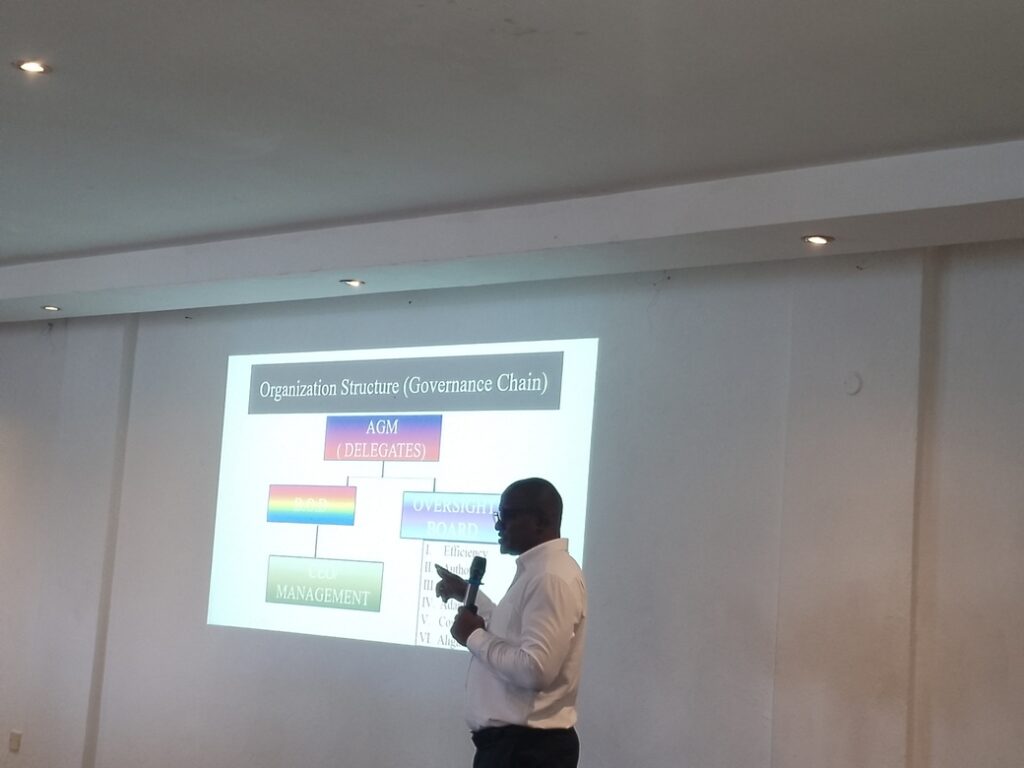
The data was presented by SASRA to the National Assembly’s Trade Committee as the regulator defended proposed amendments to the Sacco Societies Act.
A key proposal in the Bill is the establishment of a Deposit Guarantee Fund that would protect members’ savings up to Sh100,000 should a deposit-taking SACCO fail. SASRA argues that the proposed compensation limit would fully safeguard the vast majority of depositors.
“An assessment of deposit balance levels of SACCO members indicates that the majority of deposit accounts—equivalent to about 92 percent—hold balances of Sh100,000 and below,” the regulator said in its submission to Parliament.
According to SASRA, only about 1.56 million deposit accounts contain more than Sh100,000, while over 17.4 million accounts remain below that level.
The data also reveals a significant concentration of wealth among a relatively small number of savers. Accounts holding more than Sh1 million represent just 0.81 percent of all deposit accounts but control 38.38 percent of the sector’s total deposits, underscoring the unequal distribution of savings across the cooperative movement.
SASRA maintains that the proposed Sh100,000 guarantee aligns with international best practice, noting that deposit insurance schemes are designed to fully protect the majority of depositors rather than the largest account balances.
The regulator also cited a World Bank-supported study conducted in 2018 and 2019, which concluded that a Sh100,000 guarantee would adequately protect about 92 percent of SACCO deposit accounts while remaining consistent with principles developed by the International Association of Deposit Insurers.
Beyond deposit protection, the proposed legislative reforms seek to strengthen the competitiveness of Kenya’s SACCO sector through enhanced technology sharing and improved liquidity management.
SASRA notes that about 80 percent of regulated SACCOs have asset bases below Sh5 billion, limiting their ability to independently invest in modern digital systems required for efficient lending, payments and member services.
To address this challenge, the Bill proposes a shared services framework that would allow SACCOs to jointly access digital infrastructure while maintaining their independence. More than 76 SACCOs have already established a common technology platform and are awaiting enactment of the law before operating under formal regulatory supervision.
The reforms further propose a central liquidity framework that would enable participating SACCOs to pool liquidity, strengthen settlement systems and eventually connect to Kenya’s national payment system under the oversight of the Central Bank of Kenya.
The proposed changes are expected to enhance financial stability, improve service delivery and reinforce confidence in the country’s cooperative financial sector, which remains Kenya’s largest source of domestic savings outside the banking industry.