
Kenya’s SACCO movement has become too large, too sophisticated and too economically important to be guided by yesterday’s knowledge.
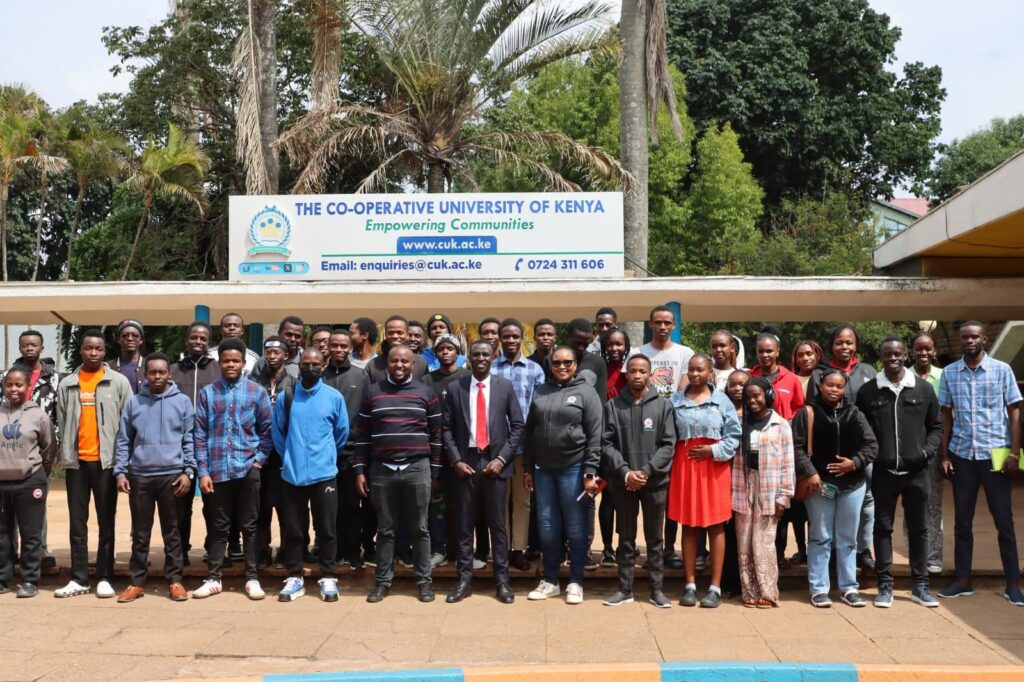
That is why the emerging engagement between the Ministry of Co-operatives and MSME Development and the Co-operative University of Kenya (CUK) deserves more than a ceremonial handshake. If structured around practical outcomes, the partnership could strengthen the knowledge and professional capacity needed to sustain the country’s co-operative economy.
The engagement between CUK Vice-Chancellor Dr. Benard William Chitunga and Cabinet Secretary Wycliffe Oparanya comes as SACCOs face digital disruption, cybersecurity threats, changing member expectations, regulatory demands and competition from banks and fintechs. They are also expected to contribute more to enterprise development and wealth creation.
Meeting these demands requires leadership supported by continuous learning. Regulation remains essential, but it cannot achieve this transformation alone.
Closing the knowledge gap
Every regulatory reform eventually faces a practical question: do the people responsible for implementing it have the necessary knowledge and capacity?
CUK could help address this gap through specialised training and professional development for SACCO directors, managers, delegates, employees and other sector professionals.
Modern SACCO boards must understand enterprise risk, liquidity, investment decisions, cybersecurity, digital transformation and financial performance. Their responsibilities extend beyond attending meetings and approving management reports.
The challenge is to strengthen professional governance while preserving the member-owned character that distinguishes SACCOs from other financial institutions. Continuous, relevant training could help directors and managers make better-informed decisions.
Making research work for SACCOs
The second opportunity lies in research that addresses the practical challenges facing the movement.
SACCOs need evidence to guide decisions on youth membership, digital banking, informal-sector participation, agricultural finance, member retention, product development and financial literacy.
A Ministry–CUK partnership could establish a research agenda informed by SACCOs themselves. An institution struggling with declining member activity, for example, could collaborate with researchers to understand the causes. Another exploring agricultural value chains could investigate suitable financing models, while a SACCO concerned about cyber-risk could work with technology specialists to strengthen its systems.
This would create a cycle in which real industry challenges inform research, findings produce practical solutions, and successful approaches are shared across the movement.
For this to work, SACCOs must help define research priorities, and findings must be translated into recommendations that institutions can apply.

Moving beyond lending
Kenya must also consider what it wants its SACCOs to become. If their ambitions remain limited to mobilising deposits and issuing loans, the movement risks overlooking its wider potential.
SACCO members include farmers, traders, professionals, transport operators and entrepreneurs. Their needs extend beyond credit to include business development, investment, market access and opportunities to build sustainable enterprises.
The Ministry–University partnership could support this shift through training and research in entrepreneurship, business incubation, investment, value addition, cooperative marketing and collective enterprise models.
The objective would be to help SACCOs understand members not merely as borrowers and savers, but as economic actors with different needs and ambitions. That perspective could influence product design and strengthen SACCOs’ contribution to local economic development.
Preparing for the digital challenge
Technology is another area where SACCOs cannot afford to be reactive. Members increasingly expect convenient digital services, mobile access and timely communication. Yet digitalisation also exposes institutions to cybercrime, fraud, data breaches and technology failures.
The answer is not to slow innovation, but to build the capacity to manage it responsibly.
CUK could explore specialised programmes in fintech, cybersecurity, artificial intelligence, data analytics and digital governance, while the Ministry supports an enabling policy environment.
Cybersecurity, in particular, should not be treated solely as an IT department responsibility. It is also a governance, financial and reputational risk requiring informed board oversight.
Turning partnership into results
The real test of the Ministry–CUK engagement will be what it delivers beyond meetings and formal agreements. A practical starting point would be to assess sector-wide skills gaps, develop targeted training programmes, establish research priorities with SACCOs and create mechanisms for translating findings into operational improvements.
Progress should be measured by tangible outcomes, including stronger governance capacity, better digital risk management and the adoption of research-backed solutions.
Kenya’s SACCO movement does not lack ambition. It needs a stronger connection between policy, knowledge and everyday practice.
Regulation establishes standards and responsibilities. But capable leaders, relevant research and continuous learning enable institutions to respond effectively to change. If the Ministry and CUK build their partnership around these priorities, they could help create a more knowledgeable, innovative and resilient co-operative movement, better equipped to serve members and contribute to Kenya’s economic development.