



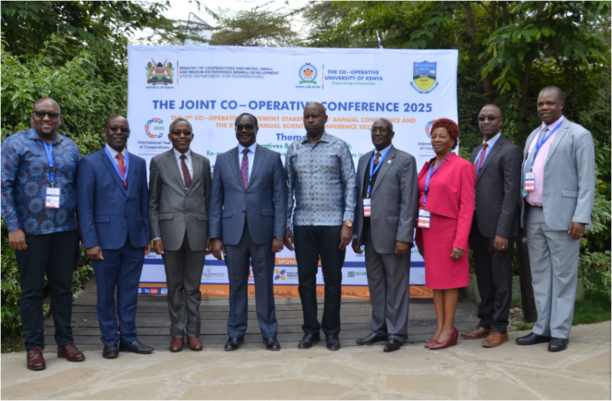
In a powerful show of unity, vision, and ambition, over 400 co-operative leaders,
scholars, policymakers, and development partners gathered in Naivasha from July
23rd, 2025, for a landmark event that is set to reshape the future of Africa’s co-
operative movement. The occasion brought together two major regional forums —
the 3rd Co-operative Movement Stakeholders Annual Conference and the 8th
Scientific Conference of The Co-operative University of Kenya (CUK) — in a first-of-
its-kind joint platform for co-operative advancement.
The high-level summit was co-hosted by the State Department for Co-operatives,
CUK, and Moshi Co-operative University (Tanzania) under the theme: “Co-
operatives Build a Better World: Re-energizing the Collective Power of Co-operatives
in Africa.”
The theme underscored the urgent need to rethink and retool Africa’s co-operatives
as engines for inclusive development, economic empowerment, climate action,
and social transformation.
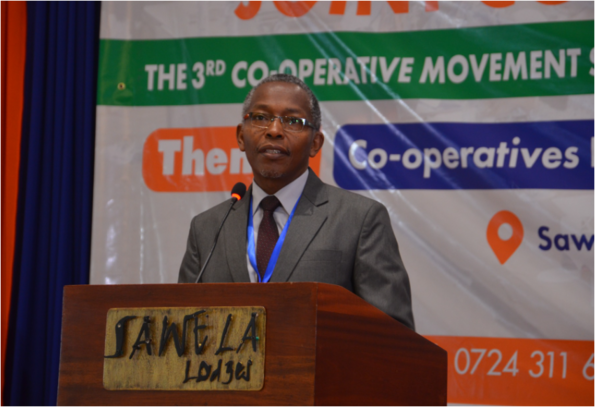
“This is not just an event. It is a movement, one that recognizes co-operatives as
powerful economic and social tools for transformation,”
— Prof. Kamau Ngamau, Vice-Chancellor, The Co-operative University of Kenya.
A Shared Vision for Africa’s Future
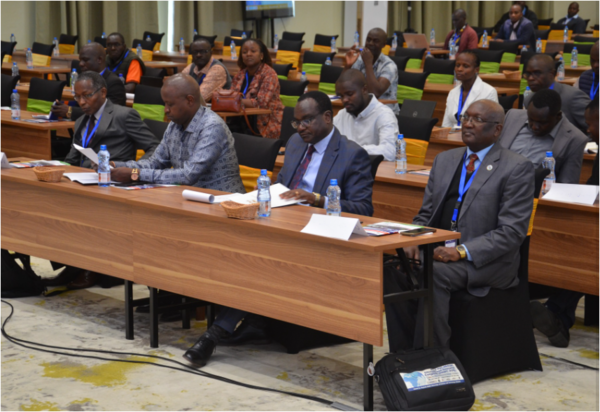
From SACCO executives to county officials, co-operative union representatives, and
international researchers, delegates explored the evolving role of co-operatives in
solving some of Africa’s most pressing challenges — youth unemployment, income
inequality, food insecurity, and climate change.
Discussions centered around:
Policy innovation for SACCO regulation and expansion
Modernizing co-operative business models for competitiveness
Strengthening SACCO governance and transparency
Promoting access to digital tools and inclusive financial services
There was consensus that collaboration between government, academia, and
grassroots co-operatives must form the backbone of regional progress.
Youth Inclusion: A Strategic Priority
A key highlight of the conference was the intense and heartfelt focus on youth
engagement in the co-operative sector. Speakers from across the region
acknowledged that for co-operatives to remain relevant and sustainable, they must
integrate youth-centered strategies — including access to affordable credit,
entrepreneurship incubation, tech-driven platforms, and leadership opportunities
within SACCO structures.
“The youth of Africa are not the future, they are the present. We must bring them
into the heart of co-operative development,”
— Patrick Kilemi, Principal Secretary, State Department for Co-operatives.
The call to action was clear: empower the youth, and the co-operative movement
will flourish.
Climate Resilience Through Co-operatives
As the continent battles rising environmental challenges, the conference also
spotlighted the role of co-operatives in climate-smart solutions. From tree planting
initiatives and renewable energy SACCOs to regenerative agriculture and circular
economy models, co-operatives were praised as grassroots champions of climate
resilience.
“We must look at co-operatives not just as economic entities but as guardians of our
environment and community resilience,”
— Prof. Elikana Lekei, Moshi Co-operative University.
Academic Alliances for Co-operative Excellence
One of the most groundbreaking outcomes of the conference was the formalization
of academic and research partnerships between CUK and Moshi Co-operative
University. The institutions signed memoranda of understanding (MoUs) aimed at
strengthening:
Joint research in SACCO and co-operative development
Regional student exchange programs
Leadership training for SACCO managers
A Pan-African co-operative innovation agenda
This academic synergy is expected to inject fresh momentum into evidence-based
policy reforms, talent development, and curriculum modernization across the co-
operative sector.
What It Means for SACCOs
For SACCOs and their members across East Africa, this conference signals a new era
— one driven by professionalism, innovation, regional collaboration, and
sustainability. With governments pledging support, and universities committing
resources to research and training, SACCOs are now better positioned to:
Embrace digital transformation
Design youth-focused products
Explore green finance opportunities
Foster cross-border alliances for growth
“This is our moment. Let’s re-energize our SACCOs and build a co-operative sector
that truly works for the people,”
— Prof. Kamau Ngamau.