Across Kenya’s coastal counties of Kilifi and Kwale, community-driven enterprises are proving that grassroots innovation can deliver measurable economic impact. With support from MESPT’s Green Employment in Agriculture Programme (GEAP), local Community-Based Organizations (CBOs) are turning agriculture and agro-waste into engines of income growth, job creation, and environmental sustainability.
Two standout initiatives — pineapple rapid multiplication in Kilifi and coconut shell briquette production in Kwale — illustrate how targeted technical support and value addition can unlock new economic frontiers for rural communities.
Reinventing Pineapple Farming in Kilifi.
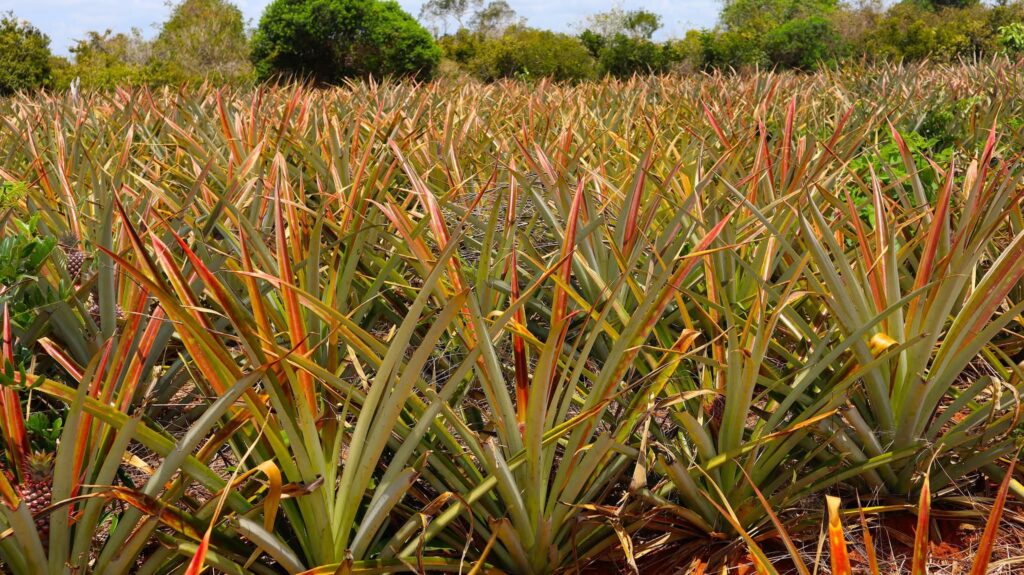
In Majengo ya Wakala Village, Kilifi County, members of Faith Pineapple CBO have embraced rapid multiplication technology to transform pineapple production into a more profitable and sustainable venture. Farmers such as Esther Bura and Loi E. Randu are among the beneficiaries of this innovation, which has shortened pineapple maturity from 18 months to just 13 months.
On the group’s 7,500-plant demonstration farm, the results are visible. Faster maturity means quicker turnover, improved cash flow, and the ability to plan production cycles more efficiently. For smallholder farmers who depend on seasonal incomes, a five-month reduction in maturity time translates directly into stronger household financial stability.
Supported by MESPT and working in partnership with Pwani University, the CBO has strengthened its technical expertise in seedling propagation, crop management, and food safety standards. The organization has also transitioned into full registration status, positioning itself for broader market engagement and future partnerships.
A key innovation lies in the circular production model introduced through rapid multiplication. Pineapple crowns — once discarded as farm waste — are now used to generate high-quality seedlings. This approach reduces production costs, minimizes post-harvest losses, and ensures a reliable supply of planting materials for expansion.
Beyond boosting yields, the initiative has widened economic participation. Women and youth are actively involved in seedling production, farm operations, and value chain activities. By combining technology with inclusive participation, the CBO is steadily improving livelihoods while promoting environmentally responsible farming practices across the coastal belt.
Coconut Waste Becomes Clean Energy in Kwale.
Further south in Kwale County, Garithe Mangroves and Coconut Value Addition CBO is demonstrating how value addition can turn agricultural waste into a viable green enterprise.
With coconut oil production exceeding 1,000 litres per month, the group faced a growing challenge: mounting volumes of coconut shells. Instead of treating them as waste, the CBO identified an opportunity to create charcoal briquettes — an eco-friendly alternative to conventional charcoal.
With MESPT support, fourteen members underwent intensive practical training at MWAfrica Eco Company in Kinondo. The hands-on sessions equipped participants with the technical knowledge needed to produce high-quality briquettes suitable for both domestic and commercial use.
The economic ripple effects are significant. By creating a structured market for coconut shells, the initiative introduces an additional revenue stream for members while creating employment opportunities for youth involved in production and distribution. It also strengthens the coconut value chain, ensuring that every part of the crop contributes to income generation.
Environmentally, the impact is equally important. Briquettes offer a cleaner energy solution that reduces reliance on firewood and traditional charcoal, thereby helping to curb deforestation and protect fragile ecosystems, including mangroves. The project aligns income generation with conservation — a critical balance in coastal regions where environmental degradation threatens livelihoods.
A Blueprint for Grassroots Economic Expansion.
The successes in Kilifi and Kwale underscore the broader economic value of investing in grassroots innovation. By focusing on technology transfer, skills development, and value chain strengthening, MESPT-supported initiatives are creating sustainable enterprises rooted in local resources.
These models are highly replicable. Rapid multiplication techniques can be extended to other horticultural crops, enhancing productivity in counties where agriculture remains the backbone of the economy. Similarly, waste-to-energy solutions can be applied to other agricultural by-products such as cashew shells, rice husks, or maize cobs — unlocking new income streams while reducing environmental waste.
Scaling up such initiatives could significantly accelerate grassroots economic development across Kenya. The approach not only generates income but also builds technical capacity, strengthens community institutions, and promotes climate-smart practices.
As rural communities grapple with unemployment, fluctuating agricultural markets, and climate pressures, these projects offer a practical roadmap for inclusive growth. By extending similar support to more CBOs across counties, development partners can amplify economic resilience, create green jobs, and foster sustainable enterprise ecosystems at the grassroots level.
The experiences of Faith Pineapple CBO and Garithe Mangroves and Coconut Value Addition CBO demonstrate a simple but powerful truth: when communities are equipped with knowledge, technology, and institutional support, they can transform local challenges into lasting economic opportunities.