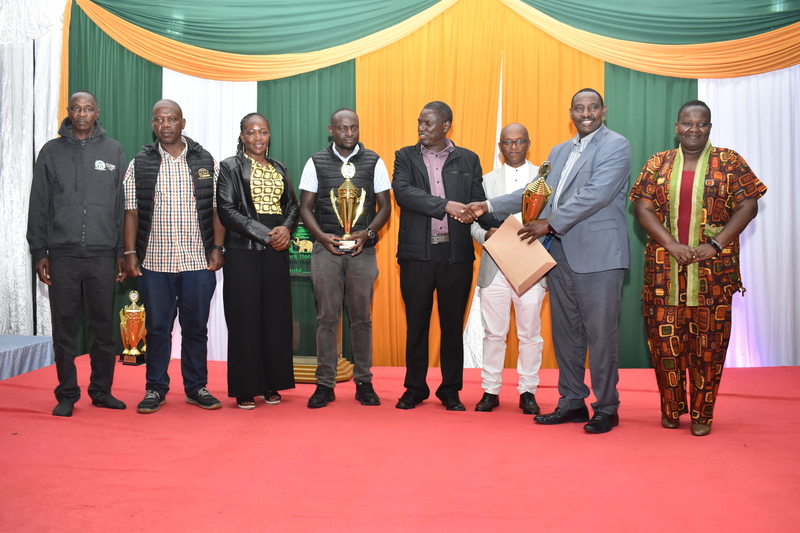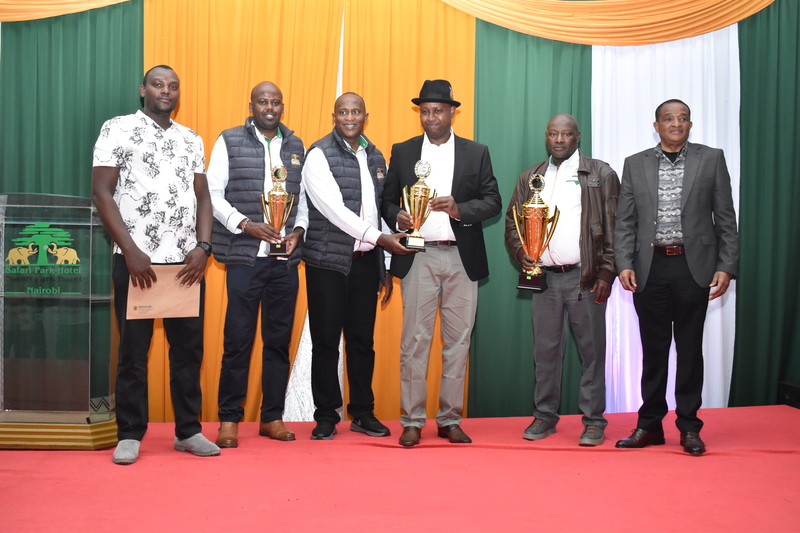

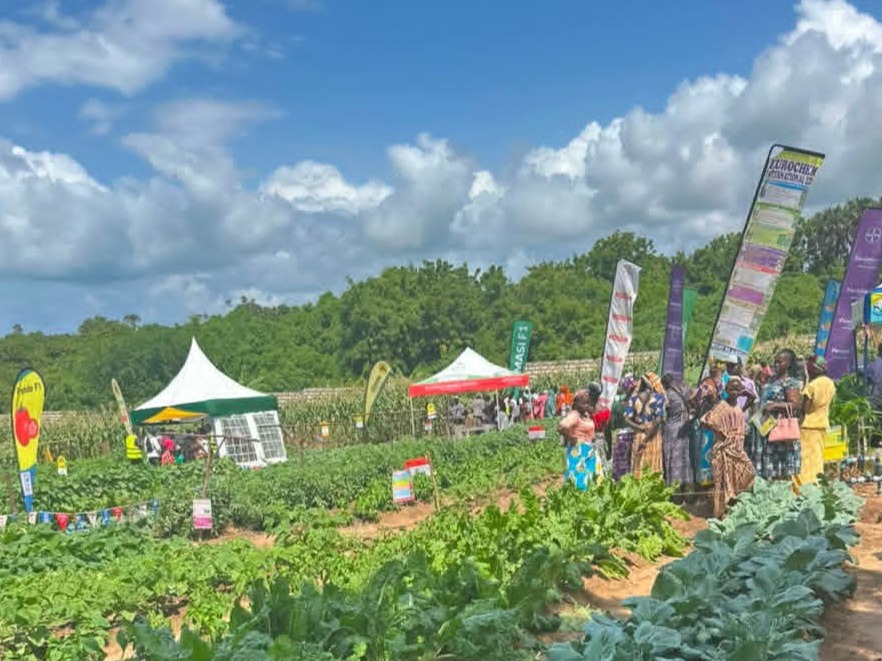
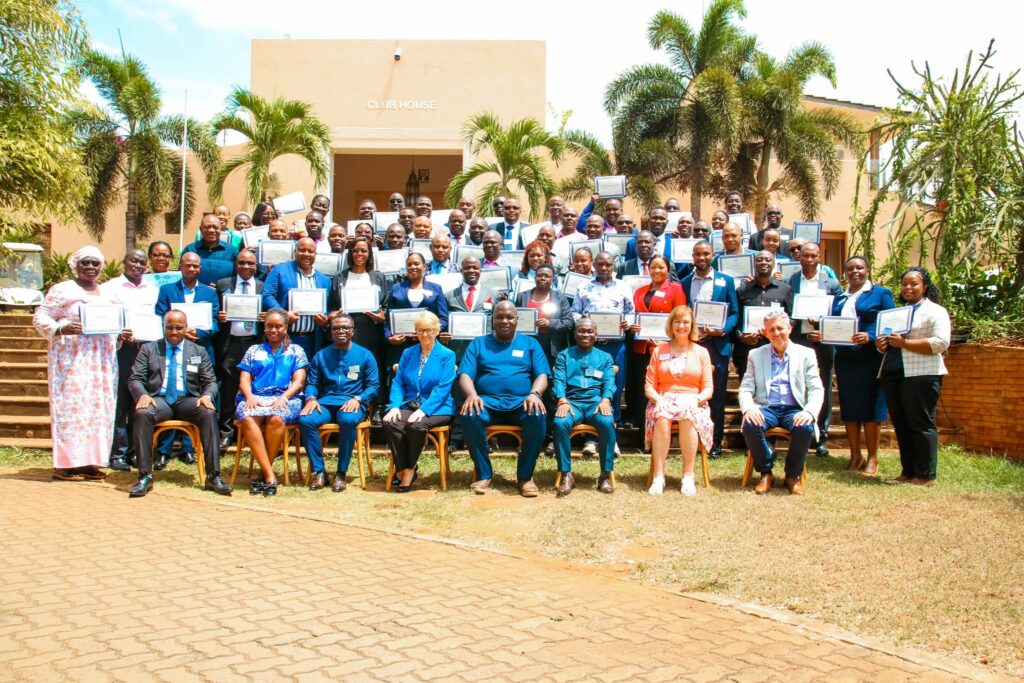

In a bold step toward transforming Kenya’s agricultural landscape, the Kenya Agricultural
and Livestock Research Organization (KALRO) hosted its inaugural Socio-Economics and
Policy Development Conference and Exhibition at its headquarters in Nairobi. The three-day
event, themed “Building Resilient Food Systems through Socio-Economics and Policy
Research,” brought together a powerful mix of researchers, policymakers, and private sector
leaders to ensure that agricultural innovation not only advances scientifically—but also
resonates with the everyday needs of farmers.
Aligning Research with Real-World Realities
In his opening remarks, KALRO Director General Dr. Eliud Kireger emphasized that for
agriculture to transform livelihoods, research must go beyond laboratory success and
address on-the-ground realities. He noted that technological advancements—however
impressive—will fall short if they fail to consider cultural, economic, and social contexts.
Dr. Kireger gave the example of a scientifically superior black chicken breed, developed for
its fast growth and high productivity. Despite its performance, he explained, uptake has
been limited in certain communities due to cultural beliefs, illustrating the critical need to
embed socio-economic and cultural analysis into research design.
He called for stronger policy frameworks that facilitate the uptake of innovations, stressing
that KALRO’s research must account for market behavior, farmer preferences, and local
traditions to be truly impactful.
Participatory Research: A New Model for Innovation
A key highlight of the event was the organization’s shift toward participatory research, a
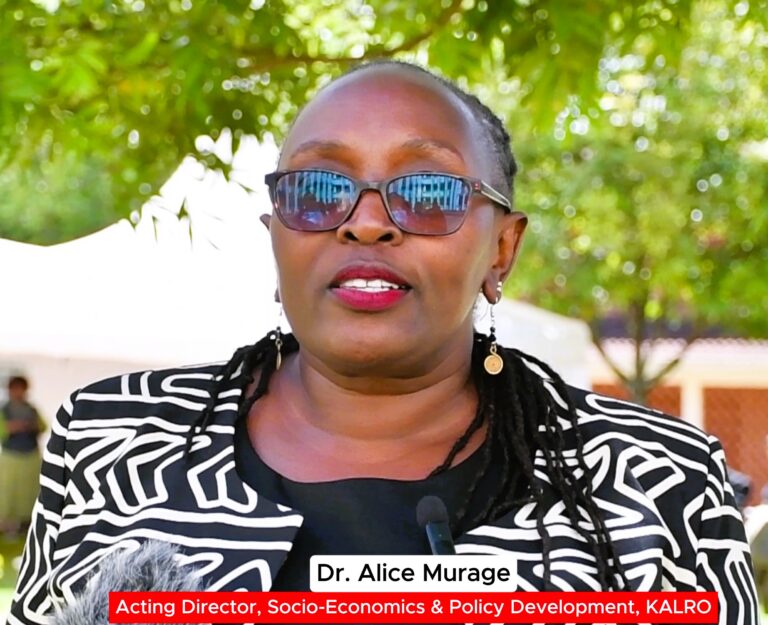
model that puts farmers at the heart of innovation. Dr. Alice Murage, Acting Director of
Socio-Economics and Policy Development at KALRO, underscored the importance of
engaging farmers from the very beginning—through needs assessments, baseline surveys,
and on-farm trials.
This farmer-first approach, she explained, significantly boosts technology adoption rates
because it ensures that innovations are tailored to specific community contexts. Rather than
imposing top-down solutions, KALRO now works hand-in-hand with farmers to co-develop
technologies that address their real challenges.
Exploring Key Themes Shaping Agriculture
The conference provided a vibrant platform for deep discussions on pressing issues facing
Kenya’s agricultural sector. Thematic sessions explored:
Market systems and agribusiness development
Gender and youth inclusion in agriculture
Agricultural policy reforms
Digital transformation across agricultural value chains
Over 132 research papers were presented, covering everything from technology adoption
patterns to economic analyses and social impact studies. Notably, the private sector and
international development partners such as CGIAR enriched the dialogue with global
perspectives and practical insights.
Digitizing Extension Services: Reaching Farmers Faster
One of the most promising outcomes of the event was KALRO’s strong commitment to
digitizing extension services. By leveraging digital platforms, the organization aims to
disseminate knowledge more efficiently and ensure that farmers—regardless of
location—have access to up-to-date information, best practices, and new technologies.
This move toward digital transformation is expected to bridge the longstanding gap between
research institutions and rural farmers, empowering communities to make data-informed
decisions and adopt innovations faster.
A Forward-Looking Agriculture Agenda
As climate change, population growth, and shifting consumer demands continue to reshape
agriculture, forums like this one are critical. The conference underscored the importance of
embedding socio-economic and policy research into agricultural innovation to ensure that
new technologies are not only available—but also accepted and applied.
KALRO’s initiative marks a significant turning point in Kenyan agricultural research—one that
recognizes that the path to food security, resilience, and prosperity begins by listening to,
learning from, and innovating with the very people agriculture is meant to serve: the
farmers.