



In Kitui County, a significant agricultural transformation is taking place. The Kamaki Farmers Cooperative Society, which started as a small community-based organization, has grown into a leading force in Kenya’s beekeeping industry, benefiting over 1,000 farmers through collective marketing, honey processing, and value-added products. Today, Kamaki is renowned for its premium “Kitui Kamaki Honey,” along with a range of bee-derived products that are steadily gaining market recognition.
Originally founded by a group of farmers engaged in dairy, poultry, and green gram farming, Kamaki began as a loosely organized community initiative that relied on donor support. While this support was helpful, it was often inconsistent, limiting the organization’s ability to sustain itself.
“It was against this backdrop of unsustainability that farmers from five locations in Kitui County came together to form what is now the Kamaki Farmers Cooperative Society,” explains Esther Mutunga, the cooperative’s manager.
This consolidation enabled farmers to gain independence, strengthen their market presence, and protect themselves from the exploitative practices of middlemen, who often purchased honey from individual farmers at prices well below market rates.
The cooperative initially focused on improving collective marketing and creating value-added products from the honey produced by its members. With Kamaki’s assistance, farmers began to earn more for their honey, benefiting from improved pricing and packaging standards. Previously, farmers sold honey in water bottles and other unattractive containers, which did little to attract customers. Now, Kamaki has a professionally designed brand and packaging for its honey, ensuring it stands out on shelves and meets quality standards.
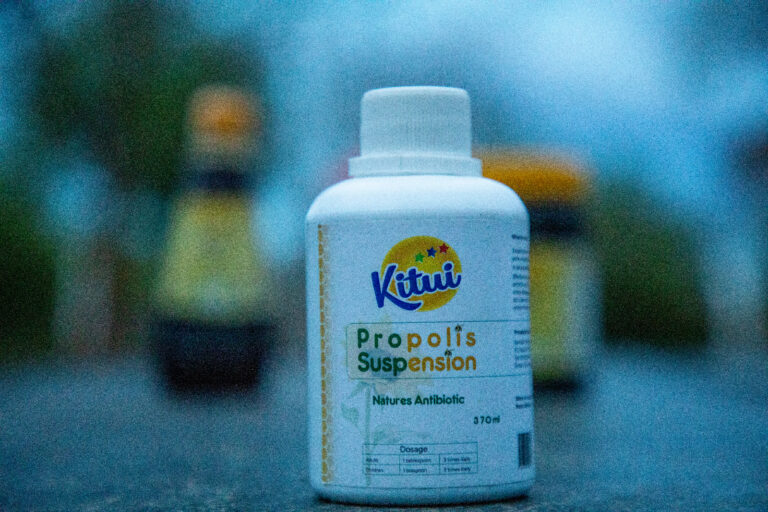
Moreover, the cooperative has developed a range of bee-based products, including beeswax soaps, body creams, and propolis. During the COVID-19 pandemic, Kamaki contributed by producing filler materials for antibiotics, underscoring its commitment to community welfare and diversification. This transformation of beekeeping from a simple agricultural project into a viable business venture has encouraged local farmers, who now view it as a reliable source of income.
Kamaki’s success is evident in its remarkable growth in honey production over recent years. Starting with 1.2 tons of raw honey in 2018, the cooperative increased production to 2.6 tons in 2019. By 2021, production had reached an impressive 8.7 tons, reflecting the cooperative’s focus on farmer education, branding, and operational efficiency. However, the impacts of climate change were soon felt, causing production to drop to 6.0 tons in 2022 and further down to 5.4 tons in 2023.


This decline prompted Kamaki to implement climate change mitigation strategies, such as educating farmers on sustainable practices and investing in climate-resilient infrastructure. The payoff was substantial; in 2024, the cooperative recorded an impressive 40.1 tons of honey. “The long-term impact of these strategies has created a remarkable revolution in our business,” says Mutunga, highlighting the importance of climate resilience in agricultural production.
Despite these successes, Kamaki faces significant challenges in expanding its market reach. One primary barrier is the bureaucratic process required to obtain certification marks, such as those from the Kenya Bureau of Standards (KEBS), which are necessary for marketing in Kenya. Complicated procedures and industry cartels have hindered Kamaki’s access to both local and international markets. Additionally, some counterfeiters have exploited the cooperative’s brand to sell substandard honey, impacting Kamaki’s reputation and market share.
Nevertheless, Kamaki recently achieved the KEBS standard mark of quality, which has helped secure its position in the local market. The cooperative is now working to obtain the Kenya Industrial Input mark, which would protect its trademark and brand identity as “Kitui Kamaki Honey.” In the international arena, strict export regulations have forced the cooperative to cancel orders from overseas customers, a setback that directly affects farmers who could otherwise benefit from higher-value markets.
Kamaki’s advocacy efforts have also strengthened its position within the honey industry. The cooperative has successfully lobbied the county government to introduce policies that benefit local honey producers and protect farmers from market exploitation. Kamaki’s prominence in Kitui County has enabled it to nurture and support other cooperatives in the region, creating a network of community-based organizations that collectively enhance the region’s honey industry.
Additionally, Kamaki has embraced digital transformation to streamline operations. Members use online banking systems for faster payments, reducing delays and allowing for more efficient financial management. Digital marketing tools have also helped the cooperative reach a broader audience and improve its overall operational efficiency.