

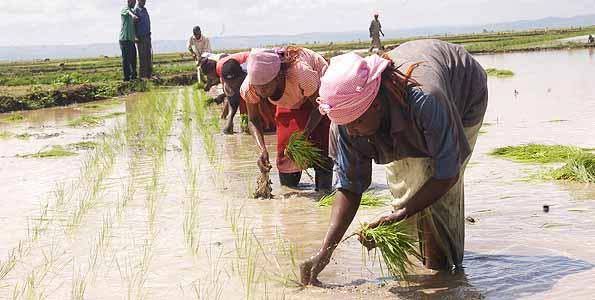
The County Government of Siaya has entered into a long-term public–private partnership aimed at revitalising rice production and strengthening cooperative enterprises across the county, following the leasing of the Usonga Siriwo Rice Mill to Nile Logistics Ltd.
Under the agreement, Nile Logistics Ltd will operate and modernise the rice mill for a period of 10 years, with a performance review scheduled after three years. The continuation of the lease will depend on the investor’s compliance with contractual obligations and delivery of agreed outcomes, reinforcing accountability and value for farmers and the county.
The Usonga Siriwo Rice Mill represents a significant public investment, with the county having spent approximately KSh 71 million on infrastructure development. Through the partnership, the facility is expected to undergo major upgrades, including modern milling machinery, routine maintenance, and improved operational efficiency. The investor is also required to offer fair and competitive market prices, establish reliable market linkages, and ensure that at least 60 per cent of the workforce is drawn from the local community.
Boost for Rice Cooperatives.
At the heart of the initiative is the strengthening of farmer cooperatives, particularly the Usonga Rice Producers Cooperative Society, which will play a central role in aggregating produce, coordinating deliveries to the mill, and supporting quality control.
The County Department of Agriculture is scaling up farmer capacity-building through the cooperative, focusing on improved agronomic practices, post-harvest handling, and productivity enhancement. By working through organised cooperative structures, farmers are expected to gain stronger bargaining power, predictable markets, and reduced exploitation by middlemen.
The county’s long-term strategy includes expanding land under rice cultivation to 11,200 acres, leveraging the Lower Nzoia Irrigation Project. Productivity is targeted to rise from an average of 2,500 kilograms per acre to 4,000 kilograms per acre, significantly improving farmer incomes and cooperative turnover.
In addition, plans are underway to introduce two rice cropping seasons annually, up from the current single season. This shift is expected to guarantee a consistent supply of paddy to the mill, which has a processing capacity of 2.5 metric tonnes per hour, while also ensuring steady cash flow for cooperative members throughout the year.
Local Economic Impact.
Beyond farming, the partnership is expected to stimulate rural employment, support agri-based enterprises, and create new opportunities in transport, storage, packaging, and marketing. The investor will remit an annual lease fee to the county, generating revenue that can be reinvested in agricultural extension services and cooperative development.
Governor James Orengo has previously observed that full utilisation of Siaya’s irrigation potential could enable the county to produce more than 35 per cent of Kenya’s rice requirements. Such output would position Siaya as a strategic player in national food security while elevating the role of cooperatives as engines of inclusive economic growth.
A Model for Agro-Industrial Growth.
The lease agreement signals a renewed commitment by the county to public–private partnerships that support agro-industrialisation, value addition, and farmer empowerment. For cooperatives in the region, the revitalisation of the Siriwo Rice Mill offers a dependable market, improved pricing transparency, and a pathway to scale production sustainably.
As the project takes shape, it is expected to anchor Siaya as a regional hub for rice processing, strengthen cooperative enterprises, and improve livelihoods for thousands of smallholder farmers—demonstrating how well-structured partnerships can unlock the full potential of local agriculture.