Digital farmer registration, soil testing, livestock infrastructure and value addition present opportunities for agricultural SACCOs to expand lending, finance agribusiness and strengthen farmers’ incomes.
Agricultural SACCOs could play a bigger role in financing Kenya’s agricultural transformation as the government steps up investment in digital farmer registration, climate-smart farming, livestock infrastructure and value addition.
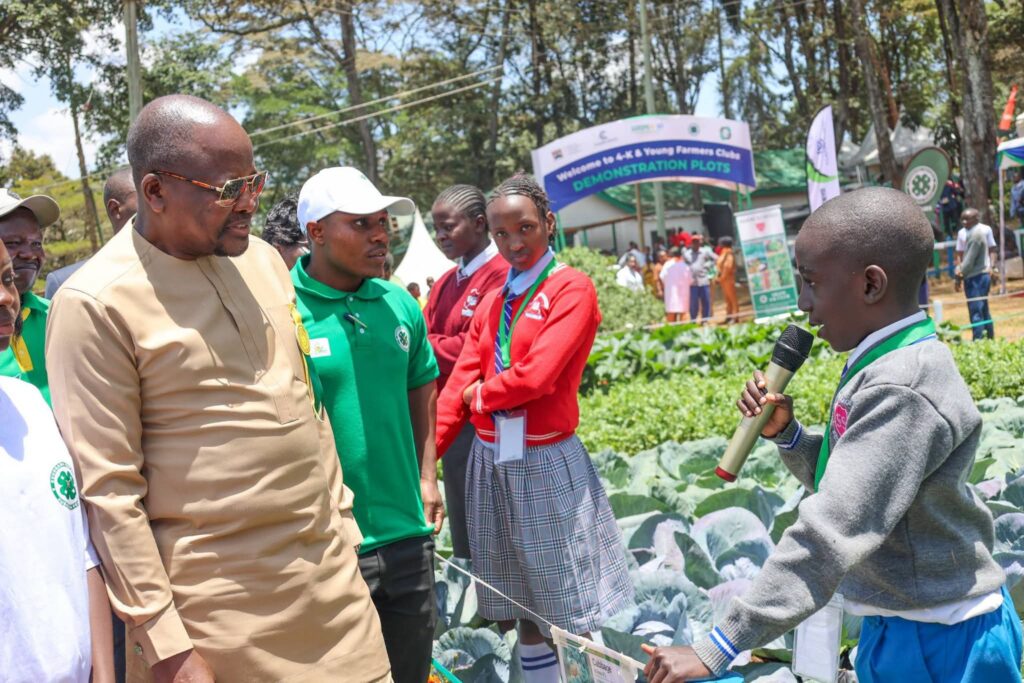
Cabinet Secretary for Agriculture and Livestock Development Sen. Mutahi Kagwe has called for stronger cooperatives and farmer aggregation to address fragmented agricultural production, improve market access and help farmers retain more value from their produce.
Speaking during the Nairobi International Trade Fair, Kagwe emphasised that Kenya’s agricultural transformation must go beyond increasing production to building commercially viable value chains that deliver better returns to farmers.
“Our approach is not simply about producing more, but about earning more from what we produce,” he said.
For agricultural SACCOs, the agenda presents opportunities to deepen agricultural lending, develop financing products tailored to seasonal farm incomes and support investments in storage, processing, irrigation, livestock production and market infrastructure.
It also raises the stakes for lenders serving farming communities, as climate risks, rising input costs and unreliable markets continue to affect borrowers’ ability to repay loans.
Digital farmer records create opportunities for agricultural lending.
Kagwe announced that 8.9 million farmers had been registered under the Kenya Integrated Agricultural Management Information System (KIAMIS), providing a digital foundation for more targeted delivery of agricultural services.
The database is intended to support access to subsidised fertiliser, certified seeds, livestock vaccination, sexed semen and animal identification services.
The government has also launched the Kenya Agricultural and Digital Information Center (KADIC) to coordinate agricultural data and technology, describing it as the sector’s “single source of truth”.
The initiatives could create opportunities for agricultural SACCOs to improve their understanding of members’ farming activities, production cycles and demand for credit, particularly where reliable, consent-based data can be shared through appropriate arrangements.
Better farmer identification and more accessible agricultural records could also support the development of lending products linked to crop cycles, livestock production, farm inputs and produce deliveries.
However, farmer registration alone does not establish creditworthiness. SACCOs would still need to assess repayment capacity, farm-level risks, existing debt obligations and market prospects before advancing loans.
A separate partnership with MPost will introduce universal digital addressing to help identify and locate farmers, potentially improving access to extension services, finance, insurance, inputs and markets.
Meanwhile, a partnership with Fahari Aviation, a subsidiary of Kenya Airways, will bring drone technology into agriculture for precision application of inputs, crop and livestock monitoring, soil analysis and early detection of pests, diseases and climate-related risks.
For agricultural lenders, these technologies could eventually improve access to information used in assessing agricultural risks, monitoring financed activities and designing more responsive financial products, subject to appropriate data-protection safeguards.
Soil testing could help reduce credit risks.
Soil degradation remains a major constraint to farm productivity, with Kagwe noting that 63 per cent of Kenya’s soils are acidic.
“Our business as the ministry, and government is the soil health, not the fertilizer. Good soil health, based on sound science and data, is what shall feed and sustain us,” he said.
The remarks followed the launch of a national digital soil laboratories project on September 29, establishing a network of modern laboratories under the Kenya Agricultural and Livestock Research Organization.
The laboratories will work with national and county governments, farmers, private-sector players and last-mile soil doctors to expand access to soil testing.
For SACCOs financing agricultural inputs, scientific soil assessment could help members make better-informed investment decisions, reducing unnecessary expenditure on unsuitable fertilisers and improving the prospects of stronger yields.
This could strengthen the economic case for financing farm inputs when loans are accompanied by appropriate agronomic advice and realistic production plans.
Agricultural SACCOs could also explore partnerships with extension providers, soil-testing services, input suppliers and producer organisations to link credit with technical support. Such arrangements would need to preserve members’ choice and avoid tying loans to unsuitable or unnecessarily expensive inputs.