



At a time when many financial institutions are navigating economic headwinds, IG Savings and Credit Co-operative Society Limited has posted solid growth across key indicators, underscoring resilience, strategic leadership and a sharpened focus on digital transformation.
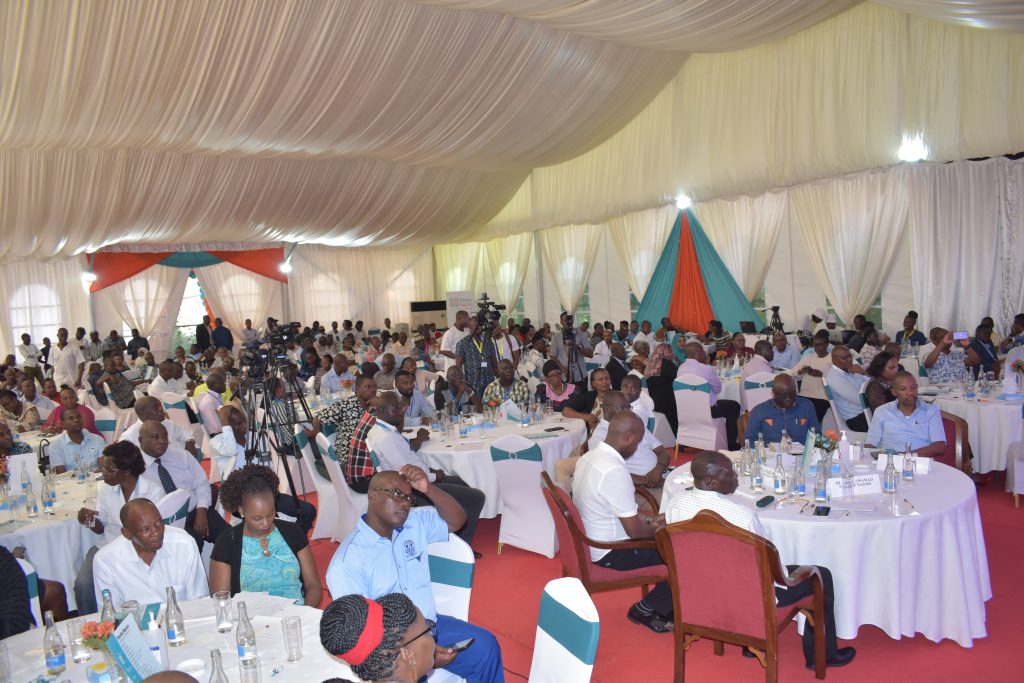
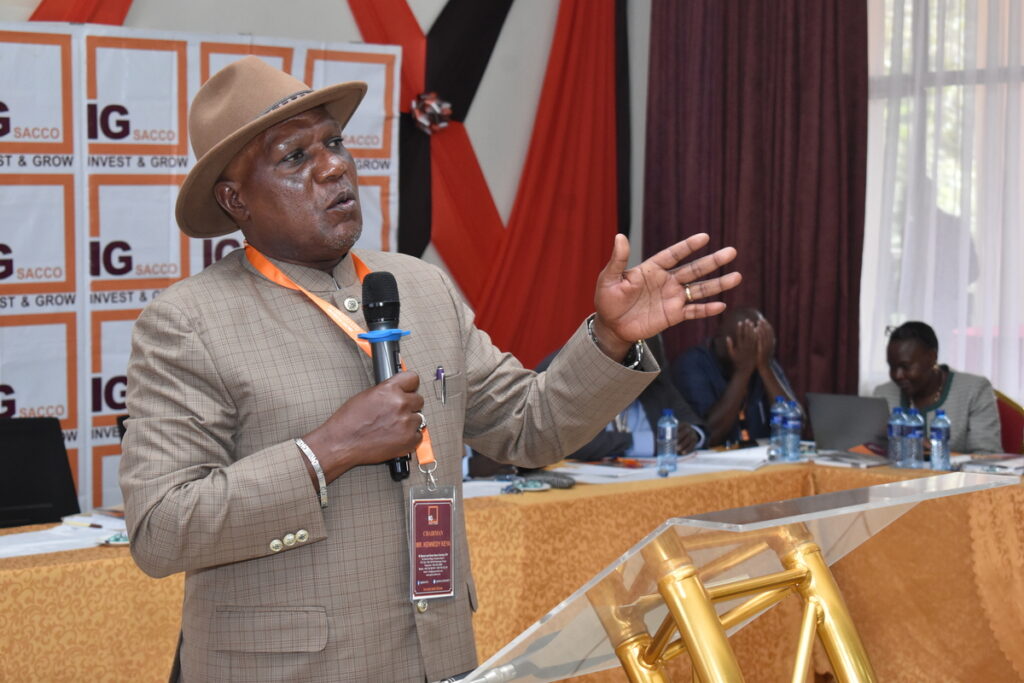
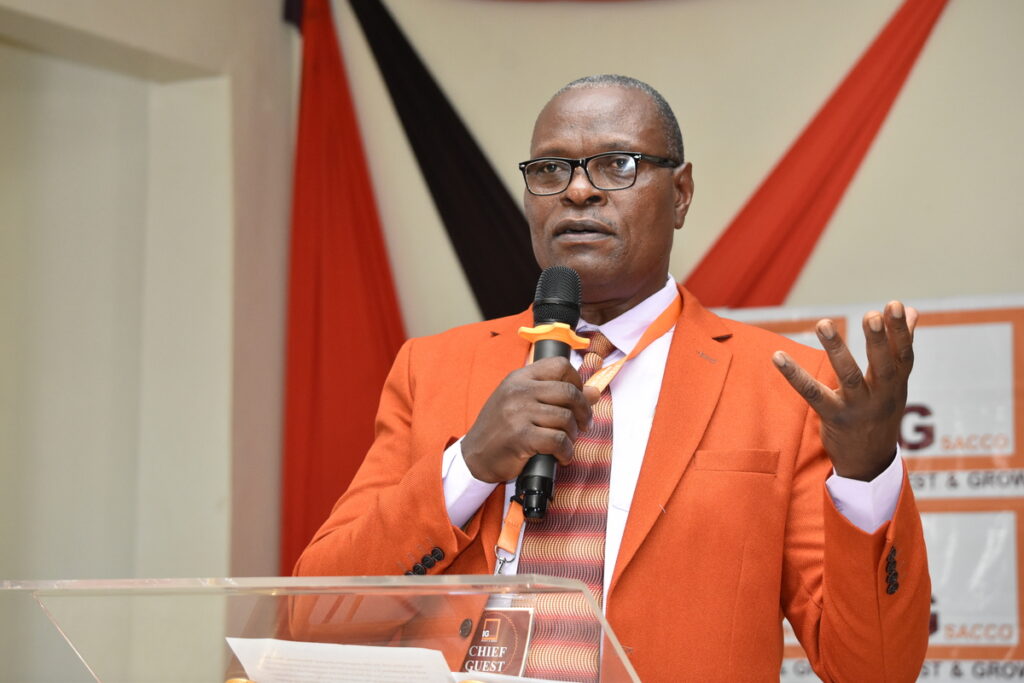
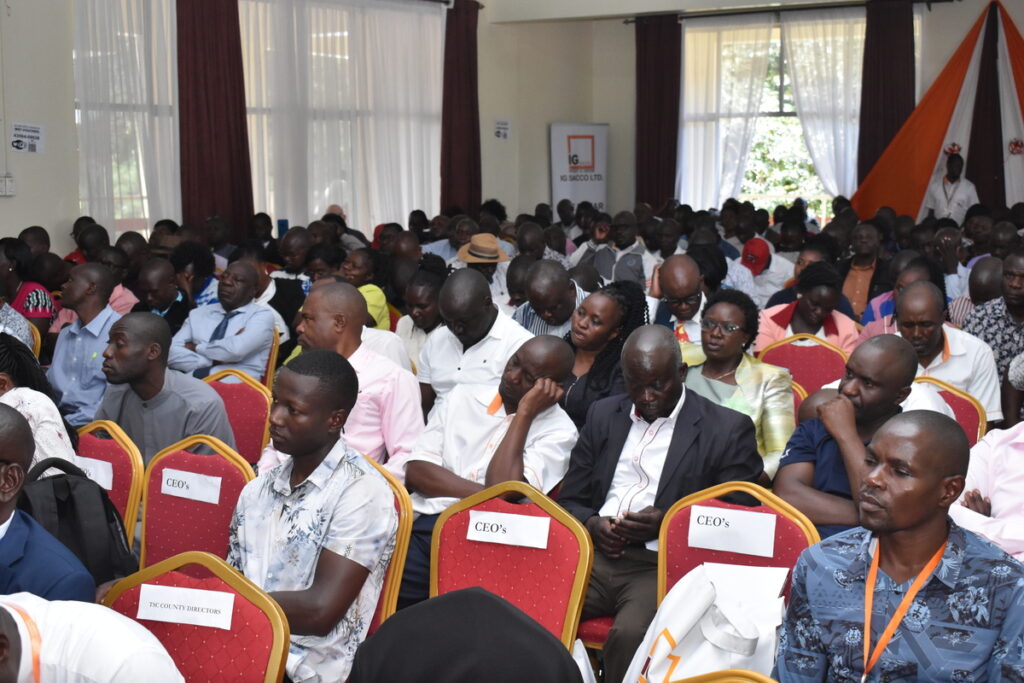
Speaking during the Annual Delegates Meeting (ADM) held on February 27, 2026, at Golf Hotel Kakamega, Chairman Rodgers Wanjala Waswa painted the picture of a Sacco steadily expanding its asset base, deepening member engagement and modernizing its operations to remain competitive in a dynamic financial landscape.
Strong Financial Performance Anchors Growth.
The Sacco recorded growth in assets, income, loan portfolio and non-withdrawable deposits for the year ended December 2025.
Total assets rose to KES 16.404 billion from KES 14.644 billion in 2024, representing a 12 per cent growth. Income grew by 14.4 per cent to KES 2.288 billion, while the loan portfolio expanded by 14.8 per cent to KES 14.103 billion. Non-withdrawable deposits also climbed by 11.6 per cent to KES 9.652 billion.
Chairman Waswa attributed the growth to strong loan uptake, sustained member contributions and diversified investments.
“This performance reflects enhanced loan uptake and the commitment of our members through continuous monthly contributions,” he noted, adding that increased loan interest income significantly boosted overall earnings.
Credit disbursement grew by 20 per cent, from KES 10.334 billion in 2024 to KES 12.438 billion in 2025. Income-based loans recorded the highest surge, growing by 28 per cent, while investment-based loans rose by 12 per cent.
According to the chairman, the growth was supported by continuous member education, improved recruitment and the expansion of FOSA salary earners.
Digital Shift Gains Momentum.
A key pillar of IG Sacco’s strategy is digital transformation. The Sacco is progressively digitizing both BOSA and FOSA loan products to enhance efficiency and convenience.
Currently, members can access E-FOSA Loans, E-Loans, E-Salary/Pension Advances and E-Dividend Advances. Plans are underway to digitize additional short-term loan products in 2026 while streamlining e-guarantorship and credit scoring systems.
Under the ICT agenda, the Sacco has implemented an Electronic Document Management System (EDMS), enhanced e-guarantorship modules and established a Call Centre to improve responsiveness.
Members have been encouraged to utilize the Call Centre and WhatsApp channel to access services remotely, including those in the diaspora.
The chairman emphasized that technology adoption is not merely about automation but about improving member experience and expanding access.
Membership and Market Expansion.
Active membership rose to 29,430 in 2025 from 27,717 in 2024, reflecting a net growth of 1,713 members. New member recruitment increased significantly, with 2,219 new members joining compared to 1,325 the previous year — an 84.3 per cent increase.
FOSA salary earners also grew to 17,033 from 15,938, marking a 6.8 per cent increase.
Despite the gains, the Sacco sees untapped potential within its core market of TSC teachers in Kakamega, Vihiga and neighbouring counties. The chairman observed that approximately 40 per cent of potential members and 55 per cent of non-FOSA salary earners remain outside the fold.
To incentivize growth, the Sacco implemented a recruitment reward program recognizing staff, delegates and directors who met referral targets.
Investing in Human Capital and Governance.
Human resource strengthening remains central to IG Sacco’s strategic direction. Staff establishment stood at 66 in 2025, following reinforcement of key departments including Credit, FOSA and Finance.
Senior positions such as Operations Manager, Savings Manager and Human Resource Manager were onboarded to enhance risk management, compliance oversight and ICT innovation.
“We shall continuously monitor and evaluate human capital performance to ensure delivery of member-centric services and sustained growth,” the chairman affirmed.
Supervisory Committee Affirms Stability.
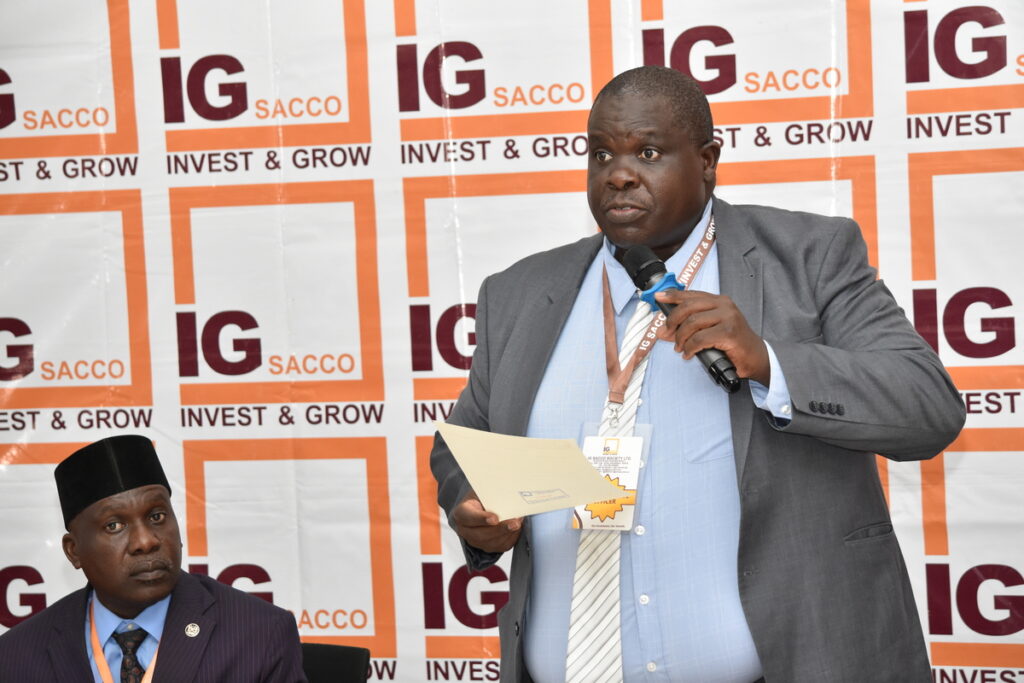
The cooperative’s Supervisory Committee, through its Chairman Justine Mutanyi, confirmed that the Sacco generally complied with regulatory and governance requirements.
The committee also proposed migrating fully from physical suggestion boxes to a digital Customer Relationship Management (CRM) platform to streamline feedback management.
Ben Kangale, the Kakamega County cooperative director praised the IG Sacco’s smooth leadership transition as a rare and commendable example of African governance. He noted that while some leaders “rather die than resign,” the society’s orderly change in power set a significant precedent for the Kakamega region. This transition, he suggested, reflects a “true leadership” that aligns with the government’s broader goals for the cooperative movement.
He emphasized that the Ministry of Cooperatives and MSMEs views Saccos as vital engines for socio-economic growth, particularly for those lacking the capital to participate in the traditional economy. Kangale shared a personal story of his father, a P2 teacher with twelve children, who used the “Sacco model” to finance his family’s education through flexible credit and top-ups. He asserted that “the cooperative sector is a socio-economic development enabler in Kenya,” acting as a bridge for the poorest segments of the population to gain requisite skills and financial stability.


This is Gorgeous!