


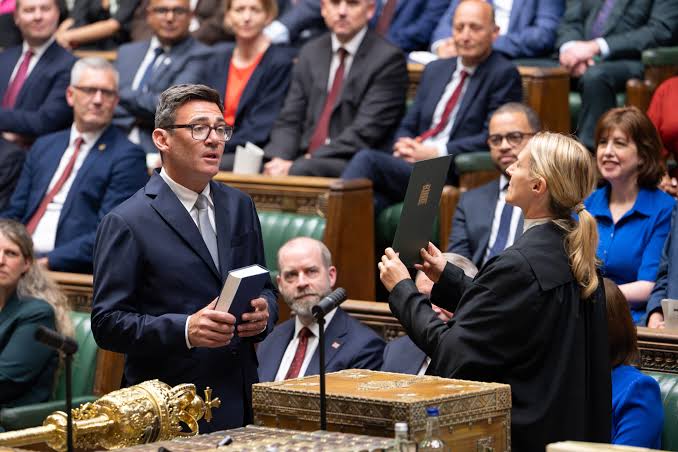
The rise of Andy Burnham as Britain’s first Labour and Co-operative Prime Minister is more than a historic political development in the United Kingdom. For Kenya’s cooperative movement, it offers a thought-provoking lesson: cooperative values can move beyond boardrooms, farms and SACCO branches to influence the highest levels of political leadership.
Burnham’s rise demonstrates what can happen when cooperative principles become part of a leader’s political identity. His emphasis on community empowerment, shared prosperity, prevention rather than crisis management and giving people greater control over their communities reflects ideas that have long been at the heart of the cooperative movement.
For Kenya, the question is worth asking: Could the cooperative movement one day produce a president or other national leader whose political philosophy is rooted in cooperation?
The possibility should not be dismissed.
Kenya has one of Africa’s most developed cooperative movements. Millions of Kenyans belong to SACCOs, agricultural cooperatives, housing societies, dairy cooperatives, fisheries cooperatives and other member-owned organizations. Collectively, cooperatives mobilize enormous financial resources and provide livelihoods, credit, markets and economic opportunities to millions of people.
Yet the movement’s influence has largely remained economic.
Its political influence, particularly in shaping national leadership and public policy, remains relatively limited.
The British experience provides an alternative model. The Co-operative Party has maintained an electoral relationship with the Labour Party since 1927. Over the decades, cooperative politicians have risen through the political system, eventually reaching the highest office in the land.
The lesson for Kenya is not necessarily that the country needs a Co-operative Party. Rather, it is that cooperative leadership can become a pipeline for national leadership.
From Boardrooms to Public Leadership.
Kenya’s cooperatives should therefore think beyond financial performance and membership growth. They should also ask what kind of leaders they are producing.
A SACCO delegate, cooperative director or young member who learns accountability, democratic decision-making, transparency, financial discipline and service to others is acquiring qualities that are equally valuable in public leadership.
Cooperatives could deliberately strengthen leadership development programmes, particularly for young members. Such programmes could expose them to governance, public policy, ethics, economics, constitutional democracy and community development.
The objective would not be to turn cooperatives into political machines. It would be to produce citizens who understand that leadership is about service, accountability and collective progress.
Cooperative Values Can Address National Challenges.
Kenya faces challenges that cooperative approaches are already helping to address: unemployment, food insecurity, affordable housing, access to finance, poverty and the high cost of living.
Cooperatives offer an alternative way of thinking about these problems. Instead of waiting for government or large corporations to provide every solution, communities can organize, pool resources, own enterprises and participate directly in economic decisions.
This is where the cooperative philosophy becomes more than an economic model. It becomes a philosophy of governance.
A country governed by leaders who understand participation, shared ownership, accountability and community empowerment could potentially approach development differently.
The Bigger Aspiration.
Kenya’s cooperative movement has the numbers, institutions and economic influence to become a major force in shaping the country’s future. What it needs is a deliberate investment in leadership.
The aspiration should be to see cooperative members become governors, MPs, senators, cabinet secretaries and, eventually, perhaps even presidents—not because cooperatives should control politics, but because the values learned through cooperation can produce leaders committed to inclusive and accountable governance.
Andy Burnham’s historic rise offers a glimpse of that possibility.
For Kenya, the message is simple: cooperatives should not only ask what kind of economy they want to build. They should also ask what kind of leaders they want to produce.
The cooperative movement has already demonstrated that people can achieve more by working together.
Perhaps its next great achievement could be demonstrating that cooperation can also shape the leadership of a nation.