
Fishing communities along Kenya’s Coast are poised for a major economic transformation following the completion and commissioning of modern fisheries infrastructure in Kilifi and Kwale counties, signalling renewed investment in the Blue Economy and the growth of small and medium enterprises (SMEs) that depend on marine resources.
The projects, implemented through separate government and development partner initiatives, are expected to improve fish handling, reduce post-harvest losses, expand market opportunities and create sustainable livelihoods for thousands of fishers, traders and youth engaged in the fisheries value chain.
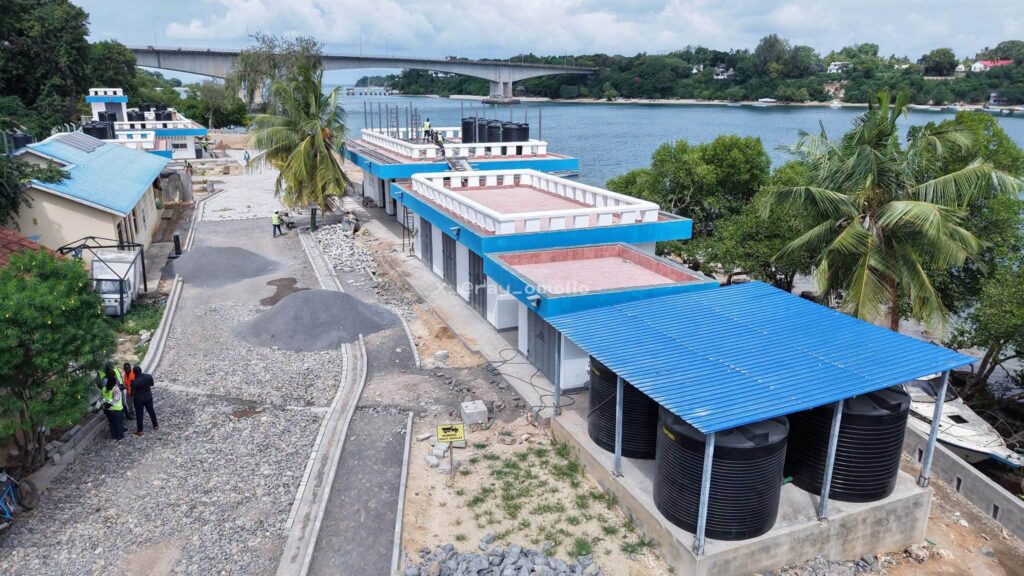
In Kilifi County, the Kilifi Central Fish Landing Site and Blue Economy Office Complex has been completed under the World Bank-supported Kenya Marine Fisheries and Socio-Economic Development (KEMFSED) Project and is awaiting formal handover to the county government before becoming operational.
Strategically located near the Old Ferry landing site in Kilifi Town, the solar-powered facility has been designed as a modern hub for fisheries management and public service delivery. It will provide a one-stop centre where fishers can access licensing and registration services, Beach Management Unit (BMU) coordination, fisheries enforcement and other government services under one roof.
Beyond improving public administration, the complex is expected to enhance fish handling standards, strengthen compliance with fisheries regulations and create a more efficient operating environment for everyone involved in the fisheries value chain.
The facility represents a significant investment in institutional capacity, providing the infrastructure needed to support a growing coastal fisheries sector while encouraging sustainable exploitation of marine resources.
Further south in Kwale County, hundreds of fisherfolk in Msambweni Constituency have received a major boost following the handover of a modern fisheries facility by the Kenya Ports Authority (KPA) under its Corporate Social Investment (CSI) programme.
Constructed at a cost of Sh126.9 million, the project directly addresses one of the biggest challenges facing artisanal fishers—post-harvest losses caused by inadequate preservation and storage facilities.
The facility comprises an administration block, a fish storage facility, an ice plant for immediate cooling of fish after landing and a fishing boat equipped with outboard engines.
The investment is expected to significantly improve fish quality, increase storage capacity and enable fishermen and fish traders to access better-paying markets that previously remained out of reach due to limited cold chain infrastructure.
Speaking during the handover ceremony, KPA Chief Executive Officer Capt. William Ruto said the investment demonstrates the Authority’s commitment to supporting coastal communities while contributing to the government’s agenda of expanding the Blue Economy.
He noted that modern preservation facilities will allow fisherfolk to keep their catch fresh for longer periods, reducing spoilage and enabling them to negotiate better prices instead of making distress sales immediately after landing.
According to KPA, the Authority will conduct an evaluation after three years to assess the project’s impact on community livelihoods, sustainability and the overall development of the local fisheries sector.
Together, the Kilifi and Kwale projects illustrate a broader national strategy of strengthening Kenya’s Blue Economy by investing not only in marine infrastructure but also in the small enterprises that drive local economies.
The fisheries sector supports thousands of SMEs involved in fishing, fish trading, transport, processing, cold storage, boat repair, equipment supply and hospitality. Improving infrastructure at landing sites has a multiplier effect, creating business opportunities for entrepreneurs while increasing household incomes across coastal communities.
Modern landing facilities also improve food safety standards, enhance traceability and reduce waste, enabling coastal fish products to compete more effectively in domestic and regional markets.
For youth and women, who constitute a significant proportion of fish traders and processors, better infrastructure translates into increased business efficiency, higher product quality and greater opportunities to participate in value addition activities.
The investments also reinforce Kenya’s commitment to developing a sustainable ocean-based economy that balances economic growth with responsible management of marine resources.
As climate change and overexploitation continue to threaten fisheries globally, investments in efficient infrastructure, improved governance and modern preservation technologies are increasingly becoming essential for safeguarding livelihoods while ensuring long-term sustainability of marine ecosystems.
With Kilifi’s integrated fisheries management complex awaiting operationalisation and Kwale’s modern fisheries facility already serving communities, the two projects mark another step towards unlocking the economic potential of Kenya’s coastline.
For coastal communities whose livelihoods depend on the sea, such investments represent more than new buildings and equipment—they provide the foundation for stronger SMEs, improved incomes, enhanced food security and a more resilient Blue Economy capable of driving inclusive economic growth for generations to come.