

Kenya’s agriculture sector has emerged as one of the biggest winners in the 2025/2026
national budget, receiving a substantial allocation of KShs 47.6 billion. The funding, part of
the country’s KShs 4.2 trillion total budget, reflects the government’s firm commitment to
transforming agriculture into a robust, resilient, and market-driven sector capable of
boosting food security and creating employment opportunities.
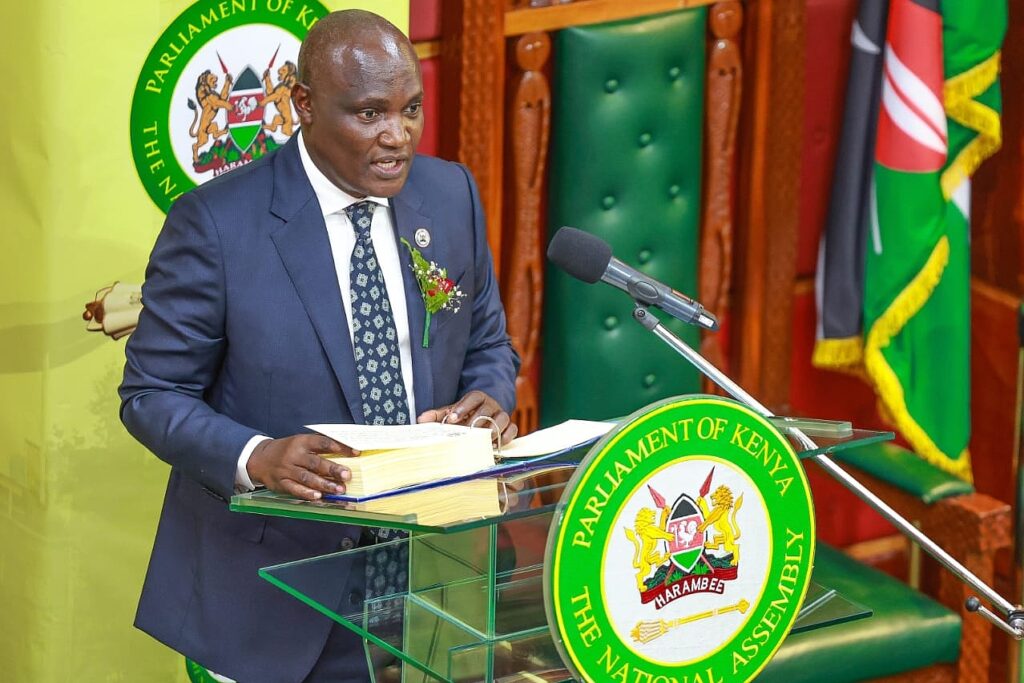
The budget, unveiled by National Treasury and Economic Planning Cabinet Secretary John
Mbadi, outlines targeted funding for key programs and projects that are expected to
address existing challenges and enhance agricultural productivity across value chains.
Among the flagship projects receiving significant funding is the National Agricultural Value
Chain Development Project (NAVCD), which has been allocated KShs 10.2 billion. This
initiative aims to help farmers increase income by adding value to their produce before
reaching the market — a major shift from traditional raw output selling.
The Fertilizer Subsidy Programme, allocated KShs 8.0 billion, will ensure continued
affordability of agricultural inputs, directly supporting farmers at the grassroots level.
Another KShs 800 million has been allocated to the Small-Scale Irrigation and Value
Addition Project, which seeks to enhance resilience and processing capacity, especially in
arid and semi-arid areas.
Other projects include:
Food Security and Crop Diversification Project – KShs 1.2 billion
Food Systems Resilience Project – KShs 5.8 billion (focused on climate adaptation
and risk management)
Livestock Sector Investments
A total of KShs 5 billion has been channeled into various livestock-focused projects. These
include:
De-Risking, Inclusion, and Value Enhancement of Pastoral Economies – KShs 2.3
billion
Kenya Livestock Commercialization Programme (KeLCoP) – KShs 1.6 billion
Livestock Value Chain Support Project – KShs 280 million
Excess Milk Mop-Up Program – KShs 400 million (to cushion dairy farmers during
oversupply)
Modernization of Milk Factories in Runyenjes and Narok – KShs 150 million
Development of the Leather Industrial Park in Kenanie – KShs 340 million (to boost
value addition in the leather sector)
Blue Economy & Fisheries
With an eye on marine resources, the government has allocated KShs 8.2 billion to the blue
economy and fisheries sub-sector. Key projects include:
Aquaculture Business Development Project – KShs 2.3 billion
Kenya Marine Fisheries & Socio-Economic Development Project – KShs 2.4 billion
Kabonyo Fisheries & Aquaculture Training Centre – KShs 500 million
Climate Resilience & Drought Management
To counter climate-induced shocks, the budget includes:
Towards Ending Drought Emergencies (TEDE) – KShs 318 million
Resilience for Food and Nutrition Security in the Horn of Africa – KShs 1.3 billion
Kenya Financing Locally Led Climate Action Project – KShs 11.5 billion (some of
which will support agricultural resilience)
Land Reforms to Enable Agriculture
Land security remains central to sustainable agricultural investment. The budget sets aside:
Settlement of the Landless – KShs 3.8 billion
Title Deed Processing & Registration – KShs 1.1 billion
Digitization of Land Registries – KShs 712 million
Geo-Referencing of Land Parcels – KShs 200 million
Construction of New Land Registries – KShs 220 million
Boosting Cash Crops & Value Addition
Cash crop reforms also feature prominently:
Coffee Cherry Revolving Fund – KShs 2.0 billion
Coffee Debt Waivers – KShs 2.0 billion
Sugar Sector Reforms – KShs 1.5 billion
Cotton Ginneries Modernization – KShs 120 million
Horticultural Compliance Enhancement – KShs 245 million
National Edible Oil Crops Promotion Project – KShs 300 million
Support for Agri-MSMEs
Recognizing the role of micro and small enterprises in agri-business:
Hustler Fund (Financial Inclusion Fund) – Additional KShs 300 million
Rural Kenya Financial Inclusion Facility – KShs 1.3 billion
Tax Measures Supporting Agriculture
To complement budget allocations, the government has introduced tax relief measures,
including:
Continued duty remission on wheat imports and tea packaging materials
Duty-free imports of animal feed production inputs under EAC duty remission
Preferential import duty (35%) for leather products and chemical duty waivers for
leather processing
This robust allocation signals a new chapter for Kenyan agriculture. By addressing the entire
ecosystem—from production and value addition to market access and land security—the
government’s 2025/2026 budget lays the groundwork for a truly transformed and resilient
agricultural sector.