



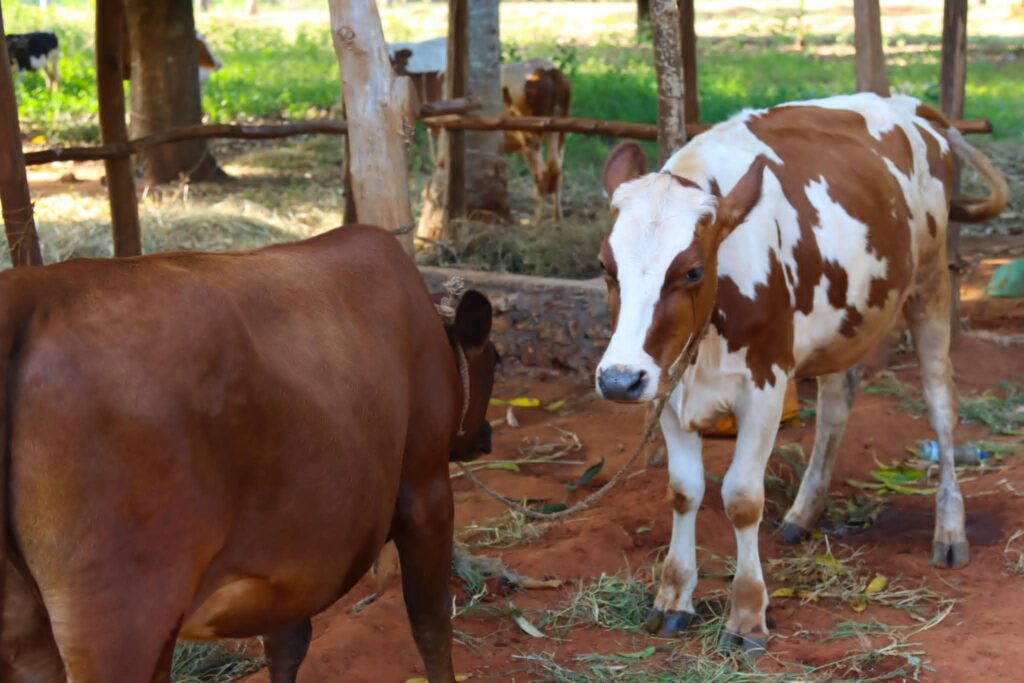
The government has announced fresh plans to strengthen Kenya’s dairy industry by placing cooperative societies at the centre of milk production, processing and marketing — a move aimed at ensuring farmers earn better and more stable incomes.
The strategy was outlined during a high-level meeting at the New Kenya Co-operative Creameries Ltd (NKCC), where the Cabinet Secretary for Cooperatives and Micro, Small and Medium Enterprises, Wycliffe Oparanya, met the company’s board and senior management. The discussions come at a time when NKCC is undergoing leadership changes, seen as a key step in reviving its role in the dairy sector.
For millions of Kenyan households that depend on dairy farming, the announcement signals a renewed government effort to fix long-standing challenges that have kept farmer earnings low despite steady growth in national milk production. These challenges include delayed payments, fluctuating milk prices, weak cooperative governance and inefficiencies along the dairy value chain.
“Our focus is to strengthen the entire dairy value chain so that farmers receive fair and predictable returns for their milk,” Mr. Oparanya said, noting that farmers remain the backbone of the industry.
Kenya’s dairy sector, one of the largest in sub-Saharan Africa, is largely driven by small-scale farmers who rely on cooperatives to collect milk, negotiate prices and access services such as credit and animal feeds. However, years of mismanagement and cash-flow problems in some cooperatives have eroded trust, pushing farmers to sell milk individually or to private processors at unstable prices.
The government says it is now targeting these weaknesses through reforms aimed at improving transparency, efficiency and accountability in cooperative societies and state-linked dairy processors. Officials believe stronger cooperatives will help stabilise farm-gate prices and protect farmers from market shocks.
NKCC is expected to play a central role in this turnaround. Once a dominant player in milk processing, the cooperative-owned firm lost ground to private competitors over the years, reducing its influence in the market. With new leadership in place — including Board Chairman David Maina Kamiru and Managing Director Joseph Malel Choge — the government believes the processor can regain farmer confidence and rebuild its market position.
Sector analysts say a revitalised NKCC could offer reliable markets for cooperative societies, improve milk quality standards and help cushion farmers during periods of oversupply or price volatility. This, they argue, would strengthen farmers’ bargaining power while reinforcing cooperatives as viable business enterprises.
Beyond NKCC, the government has emphasised the need for closer collaboration across the cooperative movement. Partnerships with local and international cooperative bodies are expected to support better governance, access to financing and the adoption of best practices across the sector.
The renewed focus reflects a broader policy shift that views cooperatives not just as social organisations, but as commercially run institutions capable of driving inclusive economic growth when properly managed.
For dairy farmers across the country, the message is clear: the government is repositioning cooperatives as key players in the milk economy, with the aim of delivering more reliable incomes and a stronger, more resilient dairy industry.