
At the 2025 Global Cooperative Conference held in New Delhi, India, co-operative leaders,
researchers, and development experts from around the world raised a red flag over the
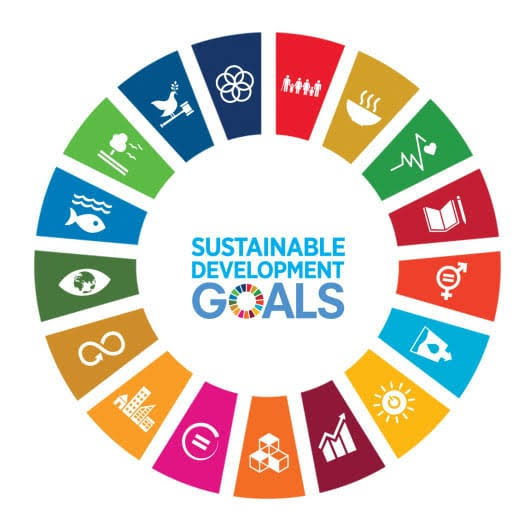
slowing progress toward the United Nations Sustainable Development Goals (SDGs).
Delegates emphasized that the current systems used to track sustainability performance,
particularly the widely adopted ESG (Environmental, Social, and Governance) indicators, fall
short in truly reflecting the contributions and realities of co-operatives and small to medium-
sized enterprises (SMEs).
One of the keynote speakers, Ilcheong Yi, Senior Research Coordinator at the United Nations
Research Institute for Social Development (UNRISD) in Geneva, offered a detailed critique of
ESG indicators. He pointed out that while ESG scoring is often used to demonstrate a
company’s commitment to sustainability, the model is inherently flawed.
Yi highlighted several key weaknesses in ESG systems:
Exclusion of SMEs: ESG indicators tend to focus on large corporations, excluding
SMEs which make up a significant portion of global economic activity.
Oversimplified Scoring: A single average score masks the diverse realities and
performances across different regions and sectors.
Lack of Context: ESG tools overlook deeper issues like tax evasion, labor
exploitation, and social impact, failing to reflect how companies operate in real-
world conditions.
According to Yi, many companies that rank highly under ESG indicators often perform poorly
when evaluated on actual sustainable impact. This disconnect undermines global efforts to
achieve the SDGs.
To address this gap, UNRISD has developed a new model: the Sustainable Development
Performance Indicators (SDPI). Unlike ESG, SDPI includes 61 indicators designed to capture
the nuanced, contextual challenges that businesses and co-operatives face on the ground.
Early data suggests that companies scoring high under ESG ratings often show drastically
lower performance under the SDPI framework—signaling that the current system may be
painting an overly optimistic picture.
The conference also featured insights from Chiara Carini, a senior researcher at Euricse in
Italy. She shared findings from a two-year project examining sustainability reporting among
co-operatives under the Legacoop umbrella—a major Italian cooperative federation. Carini’s
team tested customized indicators in key focus areas including:
Economic resilience
Employment and social inclusion
Governance accountability
Operational transparency
Environmental stewardship
As a result of this work, Legacoop is now developing a digital sustainability reporting
platform, designed to help co-operatives track and report their SDG alignment using co-op-
specific metrics—marking a promising shift toward more inclusive sustainability
measurement.
Adding an African voice to the discussions, Dr. Justin Bomba, CEO of Mufid Union in
Cameroon, outlined the major barriers African co-operatives face. These include weak legal
protections, economic instability, climate shocks, and policy environments that overlook or
undervalue the co-operative sector. Dr. Bomba emphasized that without targeted support,
co-operatives in Africa will continue to be sidelined in the global sustainability movement
despite their potential to lead community-based change.
The conference concluded with a unified call for co-operatives globally to step forward and
champion the demand for better sustainability tools, more inclusive systems, and equitable
policy environments. Participants agreed that while the co-operative model is inherently
aligned with the values of the SDGs—community empowerment, equity, and shared
prosperity—it cannot thrive under frameworks that were never designed with it in mind.
Co-operatives, the conference declared, must not only participate in global sustainability
conversations but lead them.