

The newly elected Alumni Association Chair wants to turn a long-dormant platform into a force for student support, knowledge creation, mentorship and community transformation.
For more than 15 years, the Cooperative University of Kenya Alumni Association has existed as a platform connecting former students to the institution that shaped their professional journeys. However, the association has remained largely dormant, limiting its ability to contribute meaningfully to the university, its students and the wider cooperative movement.
That is now set to change.
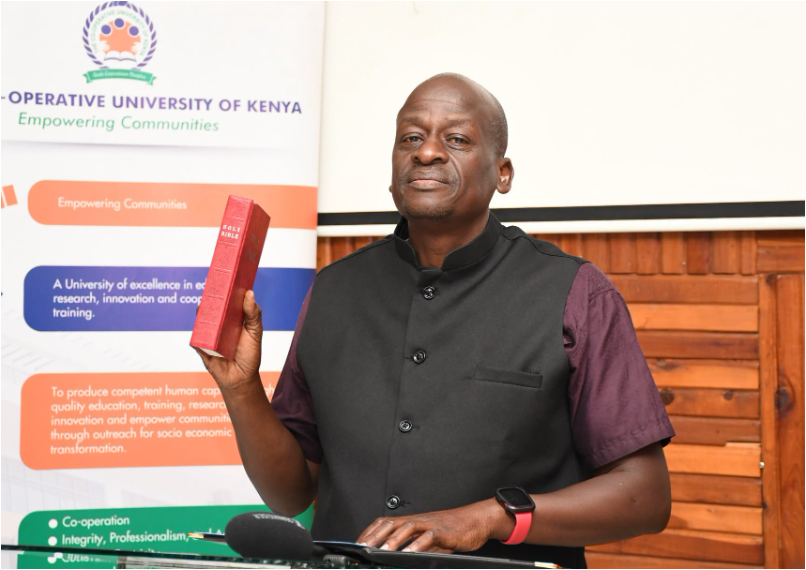
Mr. Solomon Atsiaya, Chief Executive Officer of Kenya National Police DT SACCO and the newly elected Chair of the Cooperative University of Kenya Alumni Association, is looking to give the association a renewed sense of purpose. His ambition is to move beyond having an alumni association in name and establish one that delivers tangible value.
One of his immediate priorities is supporting students who have completed their academic programmes but cannot graduate because of outstanding fees.
During his initial engagement with student leaders, Atsiaya says he learnt that several students were facing this challenge. Some have completed their coursework and received completion letters but remain unable to graduate because they have not cleared their fee balances.
He believes alumni, many of whom are now established professionals, have both an opportunity and a responsibility to help address this challenge. Through member contributions and partnerships, the association hopes to mobilise resources to support deserving students, starting with those awaiting graduation.
Beyond student welfare, Atsiaya wants the association to contribute to knowledge creation within the cooperative sector. He particularly points to challenges facing the cooperative movement, including SACCO collapses, as areas requiring deeper investigation. Through sponsored research and studies, the association can help establish why institutions fail, identify systemic weaknesses and generate lessons that can strengthen the sector.

Turning plans into action
The association’s first major initiative is a charity golf event aimed at mobilising resources from golfers, corporate partners and sponsors. The event will provide an opportunity for organisations to support the association while showcasing their products and services.
Atsiaya says the intention is not simply to raise money for immediate activities but also to establish an investment fund that can generate resources for future programmes.
The immediate priority, however, is supporting students who have completed their studies but remain unable to graduate because of outstanding fees. Working with the university’s Dean’s Office and Registrar, the association hopes to identify those in need and assist as many as its resources allow ahead of the December 4 graduation ceremony.
The new leadership is also working to establish a database of alumni and reconnect former students with the university and one another. This will provide a stronger network through which professional expertise, resources and opportunities can be shared.
Since assuming office, the team has conducted elections, been sworn in and opened a bank account for the association. It is also working to regularise its records with the Registrar of Societies and benchmark against established alumni associations at other universities.
Atsiaya acknowledges that rebuilding an association that has been inactive for years will take time. Nevertheless, he is clear about the direction he wants the new leadership to take.
“I’m not interested in stories. I’m looking at the impact,” he says, emphasising that resources mobilised must be properly managed and directed towards activities with measurable outcomes.
He also appreciates partners who have already expressed willingness to support the initiative and calls on more organisations and individuals to come on board.
Ultimately, his vision is for an alumni association that does more than bring former students together. It should help students complete their education, strengthen research within the cooperative movement, create opportunities for young graduates and contribute to surrounding communities.
For Atsiaya and his team, success will not be measured by the number of plans announced, but by the lives changed and the value created for the university, its students and the wider cooperative sector.