



Strategic leadership, governance and enterprise risk management emerge as critical priorities for SACCO CEOs
For a SACCO chief executive, delivering strong financial results is only one part of the leadership responsibility. The CEO must also manage relationships, anticipate risks, protect member confidence, execute strategy and ensure that the institution remains sustainable long after their tenure.
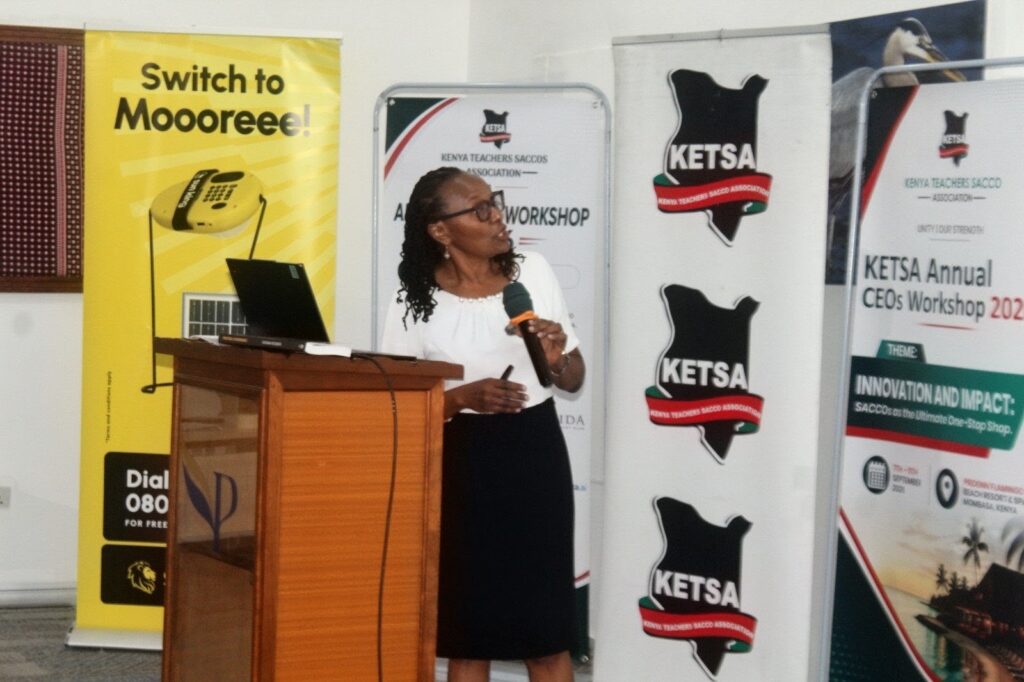
These leadership demands came into focus during the KETSA Annual CEOs Workshop 2026, where SACCO chief executives examined the changing responsibilities of institutional leadership.
Ms. Wambui Mbesa, CEO of Relational FS East Africa subsidiary, led an engaging session on strategic leadership, governance and enterprise risk management, giving CEOs an opportunity to reflect on some of the common challenges confronting SACCO leaders and how they can navigate them.
One of the central issues emerging from the discussions was the importance of maintaining a healthy Board–CEO relationship.
For SACCOs, effective governance depends heavily on a clear understanding of the responsibilities of the Board and management. The Board provides oversight, approves strategy and holds management accountable, while the CEO leads the implementation of the strategy and oversees daily operations.
When the two sides understand these boundaries and maintain open communication, the SACCO is better positioned to make decisions and respond to emerging challenges.
A healthy relationship, however, does not mean that the Board and CEO will agree on everything.
Constructive disagreement is part of effective governance. Directors should be able to question management decisions, challenge assumptions and demand accountability, while CEOs should be able to provide professional advice and explain the operational implications of strategic decisions.
The challenge is ensuring that disagreement remains constructive rather than developing into mistrust or conflict.
For the CEO, this calls for strong communication, transparency, emotional intelligence and respect for the governance structures of the SACCO.
Leading under multiple pressures.
Today’s SACCO CEOs operate in an environment where expectations are rising on several fronts.
They are expected to grow the loan portfolio, increase membership, improve income, control costs, meet performance targets and deliver value to members. At the same time, they must deal with regulatory requirements, technological changes, competition and increasingly sophisticated financial risks.
This creates a leadership dilemma: how can a CEO pursue ambitious growth while ensuring that the SACCO does not expose itself to unnecessary risks?
Enterprise risk management provides part of the answer.
Rather than treating risk as a problem belonging to one department, SACCOs need to view it as an organisation-wide responsibility. Financial, operational, technological, reputational, liquidity and human-resource risks can all affect the institution’s ability to achieve its strategic objectives.
The CEO therefore needs to ensure that major risks are identified early, discussed openly and incorporated into decision-making.
Cybersecurity becomes a leadership issue.
Cyber risk is among the challenges that have gained prominence as SACCOs rapidly adopt digital services.
Mobile banking, USSD services, online platforms and digital transactions have made SACCO services more accessible, but they have also created new vulnerabilities.
Cybersecurity should therefore not be left exclusively to ICT specialists.
The CEO and Board need to understand the institution’s exposure, the controls in place and the procedures for responding to a cyber incident. Staff and members also require continuous awareness because cyber criminals often exploit human behaviour through phishing, social engineering and other forms of manipulation.
A cyber incident can result not only in financial losses but also in damage to the SACCO’s reputation and member confidence.
Meeting targets while protecting sustainability.
Performance targets are another reality of SACCO leadership.
Boards and members expect management to deliver results, but pursuing targets without considering the risks behind them can create problems.
Rapid loan growth, for instance, may increase income, but weak credit assessment and monitoring could eventually lead to deterioration in loan quality.
Strategic leadership therefore requires CEOs to look beyond whether a target has been achieved. They must also consider how it was achieved and whether the result is sustainable.
This means balancing short-term performance with long-term institutional health.
Managing liquidity and protecting confidence.
Liquidity is another area requiring constant attention from SACCO leadership.
Members expect to access their savings and receive services when they need them. A liquidity challenge can therefore quickly become a confidence issue.
CEOs need to understand the SACCO’s cash flows, deposit patterns, loan disbursements, investments and obligations. Scenario planning can also help management prepare for unexpected changes, including increased withdrawals or slower deposit growth.
The objective is not simply to have sufficient liquidity today, but to ensure the institution can meet its obligations under different circumstances.
Reputation and the CEO’s legacy.
Reputation is equally important.
For SACCOs built on member trust, the way an institution handles complaints, communicates during difficult periods, protects personal information and responds to mistakes can have a lasting impact.
The CEO plays an important role in establishing a culture of transparency, accountability and responsible communication.
This also connects to another important leadership question: What legacy will the CEO leave behind?
A CEO’s tenure is temporary, but the SACCO is expected to continue serving members for generations.
Legacy should therefore go beyond personal achievements or impressive annual results. It can be reflected in stronger governance systems, capable successors, improved risk management, better technology, a stronger organisational culture and greater member confidence.
The leadership challenge is consequently not just to run the SACCO successfully today, but to leave behind an institution capable of succeeding tomorrow.
Building resilient SACCOs.
The discussions at the KETSA Annual CEOs Workshop 2026 highlighted the increasingly complex role of the SACCO CEO.
Strategic leadership requires CEOs to balance growth with prudence, innovation with security, performance with sustainability and executive authority with effective Board oversight.
At the centre of this is a functional relationship between the Board and management.
When governance structures are respected, communication is open and both sides remain focused on the interests of the institution and its members, SACCOs are better placed to navigate cyber threats, liquidity pressures, performance demands and reputational risks. For today’s SACCO CEO, leadership is therefore not simply about achieving numbers. It is about building an institution that can withstand pressure, adapt to change and continue creating value for members long after today’s leaders have left the boardroom.