


SACCO leaders have been challenged to move beyond routine planning and regulatory compliance and instead embrace visionary leadership that prepares cooperative institutions for uncertainty, inclusion, and long-term resilience.
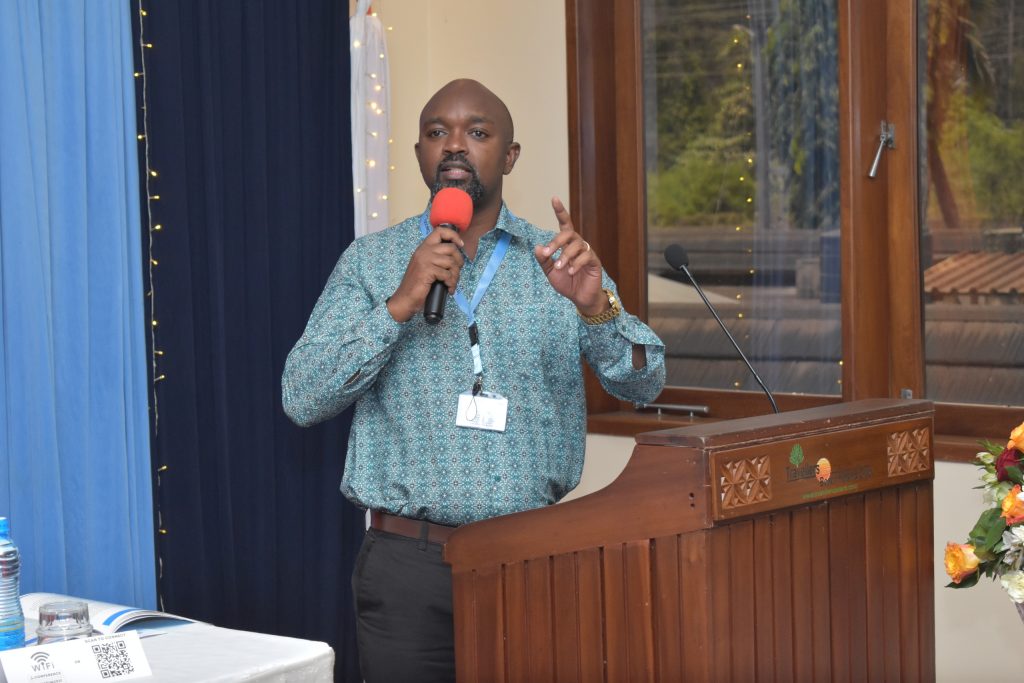
This was the central message delivered by Mr. Peter Nduati, Chief Executive Officer of Peter Nduati Consulting Ltd, during the KUSCCO SACCO Leaders’ Conference held in Mombasa in early December 2025.
Speaking under the theme “The Visionary Campus: Charting a Course for Inclusive and Resilient SACCOs,” Mr. Nduati emphasized that visionary leadership is not about accurately predicting the future. Rather, it is about deliberately shaping a future that is strategically sound, resilient to shocks, and inclusively innovative.
“Vision is the art of turning cooperative principles into a living roadmap for tomorrow,” he noted, warning that SACCOs that fail to evolve risk being overtaken by a rapidly shifting financial ecosystem.
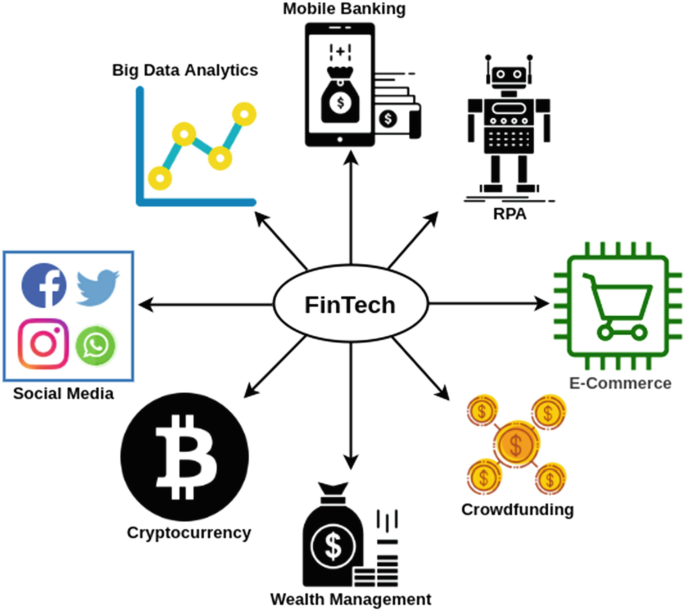
He anchored his message on what he described as a new leadership landscape redefining financial services in Kenya and across Africa. At its core is the accelerating digital tide—driven by fintech innovation, mobile money platforms, artificial intelligence–powered credit scoring, and data-driven financial products. These technologies, he said, are no longer peripheral; they are shaping how members save, borrow, and engage with financial institutions.
Equally urgent is the resilience imperative. Economic volatility, climate-related shocks, and public health crises have exposed vulnerabilities across the financial sector. SACCOs, traditionally built on stability and trust, must now also be agile and adaptive in the face of uncertainty.
The third force is the inclusion frontier. Mr. Nduati cautioned that financial inclusion must move beyond slogans. Reaching the unbanked, the youth, women, and rural communities requires intentional leadership, responsive governance, and products designed around members’ real-life experiences.
“These forces explain why conversations around strategy, resilience, and innovation are no longer optional,” he said. “They are fundamental to the future of the cooperative movement.”
On leadership pillars, Mr. Nduati identified strategic foresight as the first critical shift. He urged SACCO leaders to move beyond static five-year plans and instead prepare for multiple possible futures.


“Visionary leaders do not ask only, ‘What is our plan?’” he explained. “They ask, ‘What scenarios could our members face, and how do we remain relevant in all of them?’”
The second pillar was resilience beyond capital strength. While sound reserves remain essential, Mr. Nduati argued that true resilience is antifragile—the ability to gain from disruption rather than merely survive it. He pointed to SACCOs that responded to economic shocks by innovating quickly, such as adopting mobile lending models during the pandemic, emerging stronger and more connected to members’ needs.
The third pillar focused on inclusive innovation. Innovation, he stressed, is not about technology for its own sake but about solving long-standing problems in new, inclusive ways. Visionary leaders, he said, design solutions with members, not just for them.
He cited emerging examples across the sector, including agriculture-linked SACCOs exploring satellite data for crop insurance, youth-focused initiatives using gamified financial literacy tools, and women-led financial models that integrate lending with enterprise training.
To challenge leaders’ thinking, Mr. Nduati posed a practical reflection: how would a SACCO design a loan product for a 22-year-old gig economy worker—an Uber driver, freelancer, or content creator? The question, he said, was about cultivating empathy and relevance in leadership.
As the conference looked to the future of cooperative finance, his message was clear: visionary leadership aligns strategy, resilience, and innovation with cooperative values. In an era of rapid disruption, the future of SACCOs will belong to leaders who can see beyond the horizon, build strength through uncertainty, and innovate with inclusion at the core.