



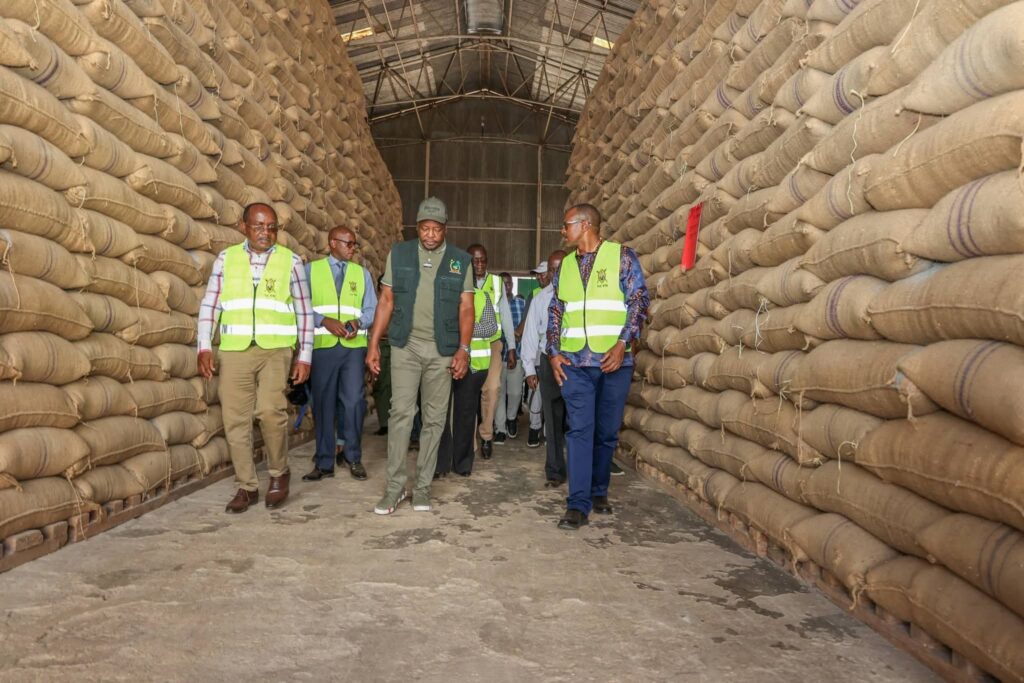
Maize farmers across the country are beginning to feel the impact of renewed government efforts to strengthen national food reserves through direct purchases from local producers, a move expected to stabilise incomes while boosting food security. The State has intensified maize procurement for the Strategic Grain Reserve (SGR), setting aside funds to ensure farmers are paid promptly for their harvests. Under the programme, maize is being bought at a price of Ksh 4,000 per 90-kilogramme bag, with an initial target of 1.7 million bags.
Agriculture Cabinet Secretary Mutahi Kagwe has assured farmers that the funds for these purchases are already in place, stressing that delays in payment should not occur. He noted that buying directly from farmers remains the government’s first option in building national reserves, rather than relying on imports. Beyond the immediate purchases, the government is working towards a longer-term goal of building grain reserves of up to four million bags. For farmers, this signals a more predictable market for their produce, especially during seasons of good harvests when prices often fall.
Alongside procurement, efforts are underway to improve maize production and post-harvest handling. These include investments in better drying facilities, improved storage systems to reduce losses, and increased access to fertiliser to support higher yields and better-quality grain. From the farmers’ perspective, these measures come at a time when high input costs and unpredictable markets have made maize farming increasingly risky. Strengthening storage and guaranteeing a buyer at harvest time could help cushion producers against losses.
The government says the wider food situation is being managed through coordinated national planning and sustained funding. Additional resources have been committed to food security interventions, with regular reviews planned to respond to changing conditions. In addition to maize, local production of rice and wheat is also being prioritised, with policies aimed at ensuring domestic produce is utilised before imports are considered. For farmers, this approach is seen as a signal of stronger support for local agriculture.
Overall, the renewed focus on local procurement is expected to support farmers’ incomes, strengthen national grain reserves, and contribute to more stable food supplies, anchored on the work of Kenyan farmers themselves.