


Matatu hootings, manamba shouts, bodaboda riders zig-zagging in narrow spaces between matatus, tracks, vans and tuk-tuks trying to force their way out of the long and sluggish evening traffic jam. Pedestrians fill up the ugly patched pavements walking cautiously to their residential places after their day’s hustles.
Some look exhausted yet they radiate resiliency to the hectic city life. ‘Mombasa huliwa mbio’ is a Kiswahili life slogan derived from the Mijikenda saying: ‘Mombasa iriwa malo’, in Mombasa, people eat by running, which means that one has to struggle extra hard to survive city life.
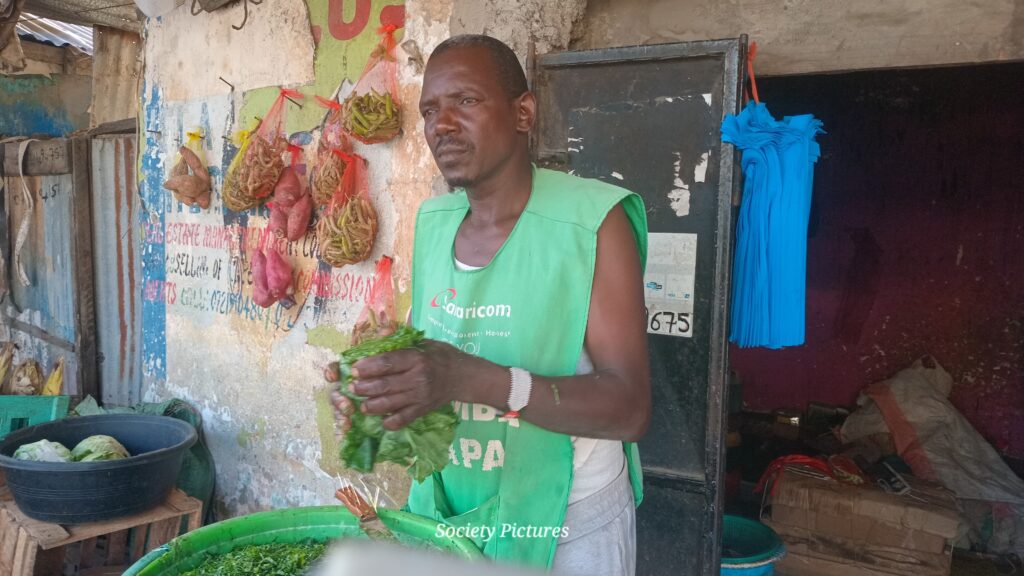
Peter Muthui, a grocer within the Safari area in Kisauni in the city of Mombasa seems to have lived up to this life slogan. As the hootings, shouts and motorbikes’ pi pii piis fill the evening air space above this road stretch, Peter is holding a bunch of Sukuma wiki (kales) in his left hand and a sharp knife in the right, chopping the greens in a big plastic bawl ready to serve his customers.
It’s a Saturday and as usual, most people leave the city in the early afternoon for the weekend. This is the time when he is busy serving his customers.
“Rarely I have time to answer a phone call from a friend during these hours. It is either I am chopping the vegetables, weighing potatoes, sorting tomatoes, or negotiating prices with my customers,” he says as he serves a customer. Peter arrived in the port city of Mombasa in 2000 as a young man. He joined a team of market labourers in the famous Kongowea market where he became a hemali, a person who carries goods for people, especially in the market at a fee.
“I worked for people, the food and agriculture product merchants in the market. I spent five years labouring in the market, working under all weather conditions. It is a very strenuous venture with insufficient income,” he recounts.
He got tired of the hustle and started thinking of a transitional way. Finally, he decided to start selling tomatoes outside his rented room in the evenings after coming back from his usual job in the market. Initially, he used to spend ksh 100 to buy his stock and sell to his neighbours but soon he realised he could sell more because the number of his customers increased.
He decided to bring more stock and set up a table outside his room where he served the customers. After two weeks, he abandoned his work in the market and committed time and resources to his new business.
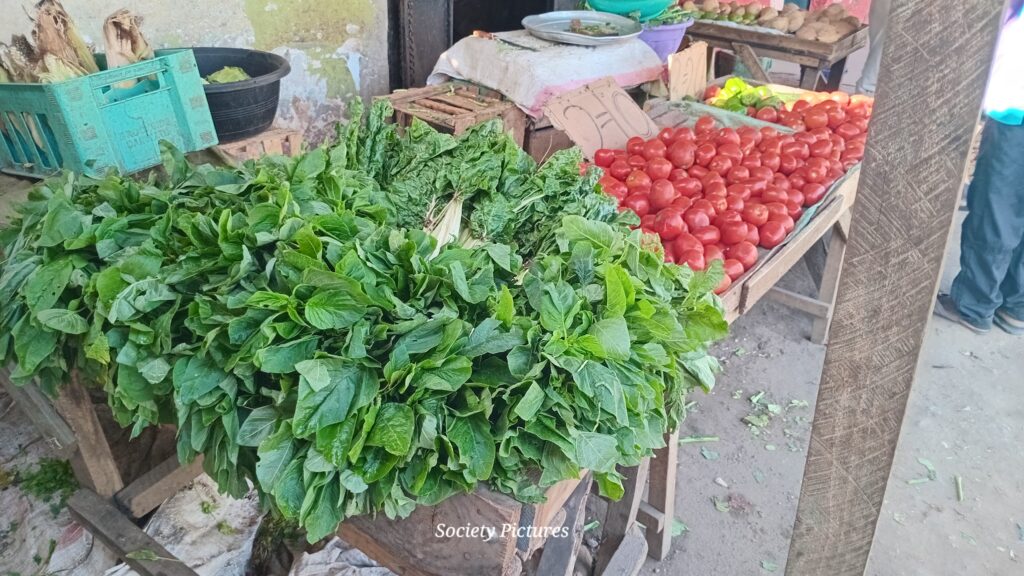
“I incorporated sukumawiki, bananas and onions into my business. I attracted more customers and soon they nicknamed me mtu wa mboga. The profits also kept on increasing so I added a new commodity, potatoes as the customers used to ask for them.” the now middle-aged man says in his green apron.
With a little financial stability, Peter got married in 2006 and, ”she was like a blessing because she became more supportive in the business. If I go to bring stock from the market, she takes out the remaining stock in the room and sells to customers,” he says with a smile.
The couple moved to a bigger room where they could store their stock and still have space to rest their ribs. As time went by, the customer base increased as did the profits. Peter and his wife decided to take the risk and rented a shop space in one of the buildings lining up the busy Safari-Mwisho wa Lami stretch in Mshomoroni.
They modified the room to suit their business needs. They started making delivery orders from stock suppliers from within and outside the city. The once two-to-three tomato business morphed into a one-stop grocery store, serving other small traders in the neighbourhood. Happily married and making good money, he and his wife bought two acres of farmland in their rural village in Meru and have built a home on a quarter-acre land plot in Mombasa’s Junda area where they live with their four children.
“This kind of business is not an easy task. There comes a time, like January when the purchasing power of customers is very low and the stock will not sell as normal. The perishable stock will get damaged and that is a loss, but that should not deter one from venturing into the business,” Peter says. ”If you are a good manager, with self-determination and discipline, you will make more money in business than even in professional jobs.”
Having been raised in a poor family and recounting the struggles Peter Muthui says it is a mistake in life to become choosy in finding a job because of the profession. ”Some young people do not like this kind of business due to the ”nice job mindset” associated with university and college graduates” he says adding that he is advising his children, the firstborn being a first-year university student, not to become victims of such a mindset.