



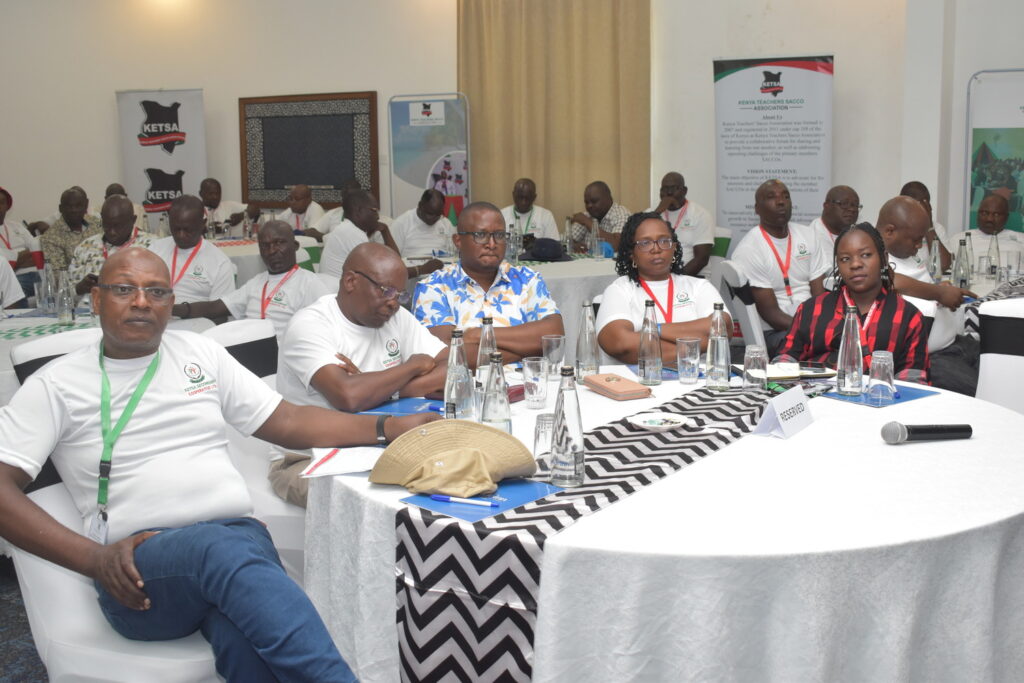
The Kenya Teachers Saccos Association (KETSA) has embarked on a groundbreaking initiative to enhance its operational capacity and better serve its members through the launch of a new secondary cooperative, Ketsa Secondary Cooperative Limited (KESECO). This innovative move signifies a major milestone for the association, positioning it as a key player in the cooperative sector’s evolution.
The official launch of KESECO, held last Friday, also marked its inaugural Annual General Meeting (AGM), during which the cooperative was formally introduced as a regulated entity under the Sacco Societies Regulatory Authority (SASRA). This step addresses longstanding concerns about the unregulated status of funds domiciled within KETSA and ensures that all monetary operations adhere to established regulatory standards. According to the chairperson, Mr. Robert Njue, this transition not only enhances accountability and transparency but also ensures proper oversight of member funds.
“With SASRA regulation, we are now assured of robust oversight, enabling us to safeguard and manage member funds more effectively,” stated Mr. Njue during the event. He further elaborated that all financial activities involving member funds would now be conducted through KESECO, providing a clear framework for operations and enhancing trust among members.
The launch of KESECO is a testament to KETSA’s maturity and growth since its inception in 2012. Mr. Njue likened this development to the association “giving birth” to a new entity that would bolster its capabilities and expand its reach. KESECO’s mandate includes addressing short-term liquidity challenges, supporting struggling member saccos, and building the capacity of weaker saccos to foster growth and stability across the sector.
A significant highlight of the event was the presence of prominent dignitaries, including the Principal Secretary for Cooperatives and SMEs, Hon. Patrick Kilemi; SASRA CEO Peter Njuguna; Commissioner for Cooperatives David Obonyo; and Cooperative Alliance of Kenya (CAK) Executive Director Daniel Marube. Their attendance underscored the importance of this initiative within the broader cooperative and economic landscape of Kenya.
In his address, PS Patrick Kilemi commended KETSA for its forward-thinking approach and emphasized the pivotal role cooperatives play in driving economic transformation. “Cooperatives and SMEs are critical allies in shaping the country’s economic future. Most SMEs are run by cooperative members who depend on the financial support provided by institutions like KETSA,” he noted. He further highlighted the sector’s contribution to the national agenda, particularly in affordable housing, citing recent data that showed housing as the primary reason for borrowing from saccos.
The PS also encouraged KESECO to uphold financial integrity and consider social responsibility initiatives such as tree planting, reflecting a commitment to community development alongside financial growth.


Commissioner for Cooperatives David Obonyo echoed similar sentiments, urging KESECO to lay a solid foundation built on clear objectives and prudent strategies. He advised the cooperative to begin with low-cost activities and gradually expand its operations as it grows. “Your focus should always be member-centered, ensuring that your activities support and strengthen member saccos,” he remarked. He also emphasized the importance of good governance, calling on KESECO leaders to uphold integrity and ethical standards in their leadership roles.
SASRA CEO Peter Njuguna reassured attendees of the regulatory authority’s support in this new chapter for KETSA. He commended the association for its commitment to adding value for its members through the establishment of KESECO. “As long as you maintain a clear value proposition and effective delivery channels, we will work alongside you to ensure success,” he affirmed. He also noted that while specific regulatory structures for secondary cooperatives are still evolving, the current framework is adequate to oversee their operations.
The Cooperative Alliance of Kenya’s Executive Director, Daniel Marube, provided a broader perspective on the unique role of cooperatives in society. He reminded attendees that cooperatives are not merely financial entities but instruments of empowerment designed to prioritize member welfare over profit. “What sets cooperatives apart from banks is their member-centric approach. KESECO must ensure that its activities align with this core principle,” he advised.
Marube also encouraged continued collaboration between KETSA and CAK, emphasizing the need for clarity of vision and objectives as the new entity embarks on its journey.
The launch of KESECO represents a bold and transformative step for KETSA, solidifying its position as a leader in the cooperative sector. By addressing liquidity challenges, supporting struggling saccos, and fostering transparency, KESECO is poised to elevate the financial health and operational efficiency of its members. The cooperative’s leadership has expressed a strong commitment to maintaining high standards of governance and ensuring that member interests remain at the heart of its activities.
As KESECO begins its operations, it sets a precedent for other associations, showcasing how secondary cooperatives can serve as effective vehicles for financial growth, capacity building, and economic empowerment. This initiative not only strengthens KETSA but also contributes to the broader goal of enhancing the cooperative sector’s role in Kenya’s economic development.
With strong leadership, a clear vision, and unwavering support from stakeholders, KESECO is well-positioned to thrive and deliver tangible benefits to its members. Its establishment is a shining example of how innovation and collaboration can drive progress in the cooperative movement.